Cards as Images
Annotations on old tarot cards tell a reader’s story as well as a deck’s
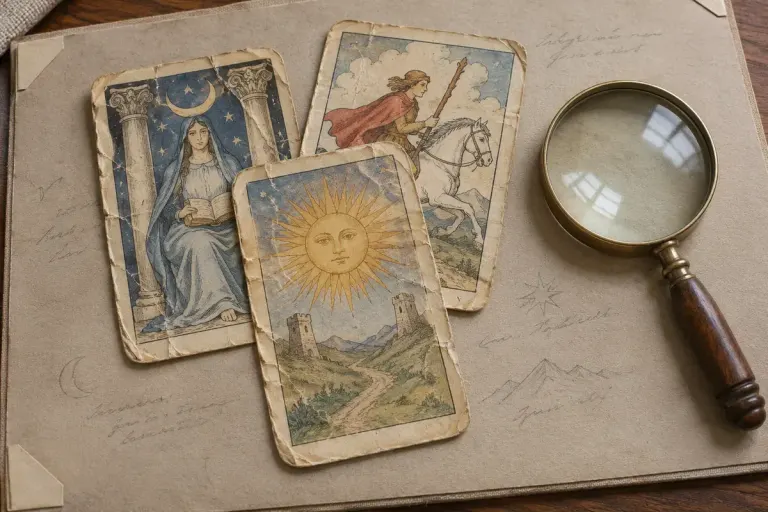
Handwritten notes on an old tarot deck can be fascinating. Separate visible annotations from guesses about their author, date and intended meaning.

A thoughtful space for symbols and self-reflection.
Explore tarot imagery, keep a reflective journal and make room for your own interpretation—without turning a card into a certainty.
Open a reflective page →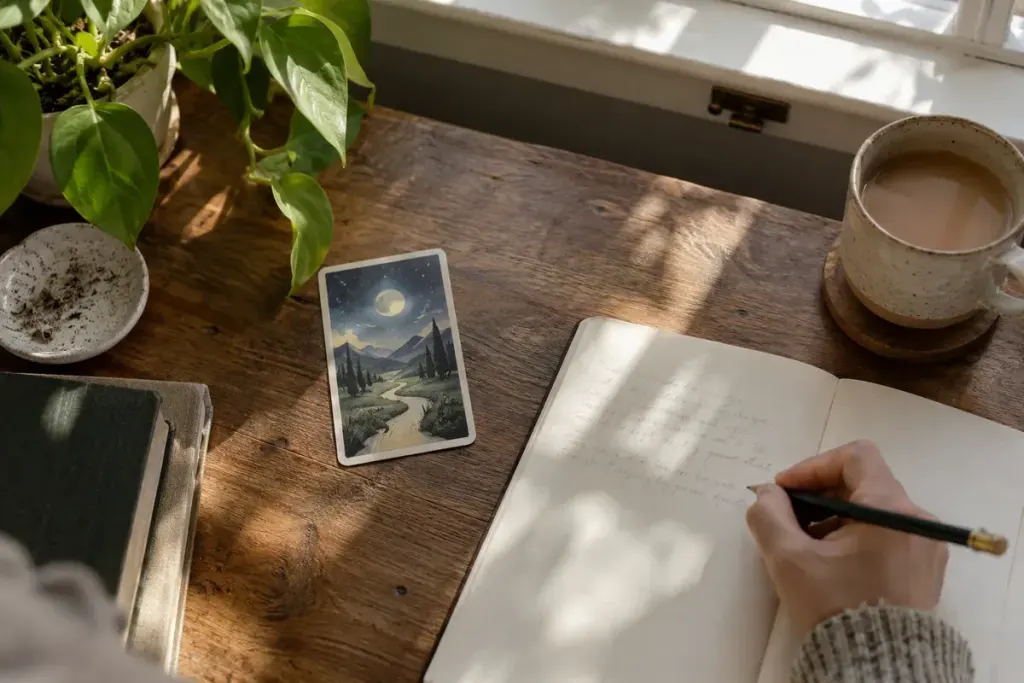
Handwritten notes on an old tarot deck can be fascinating. Separate visible annotations from guesses about their author, date and intended meaning.
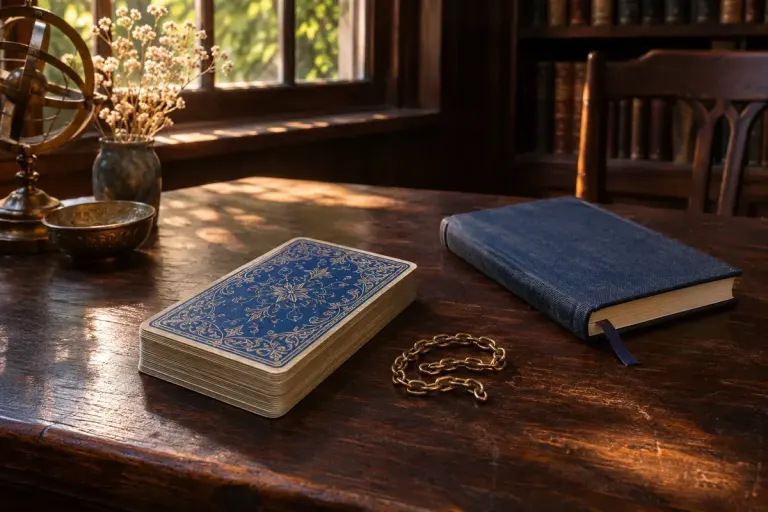
Study the chains in the Rider–Waite–Smith Devil card, separate what the picture shows from interpretation, and use a careful reflective prompt.
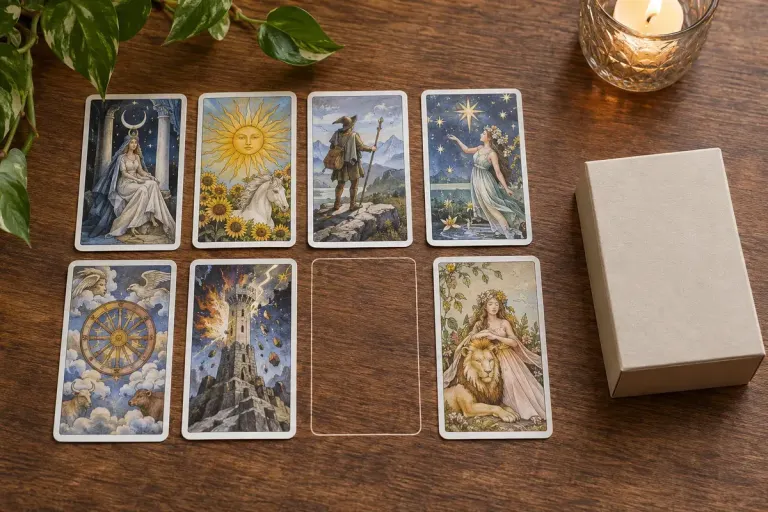
A missing tarot card does not always require a new deck. Check the edition and ask the publisher about replacements before mixing cards from another printing.
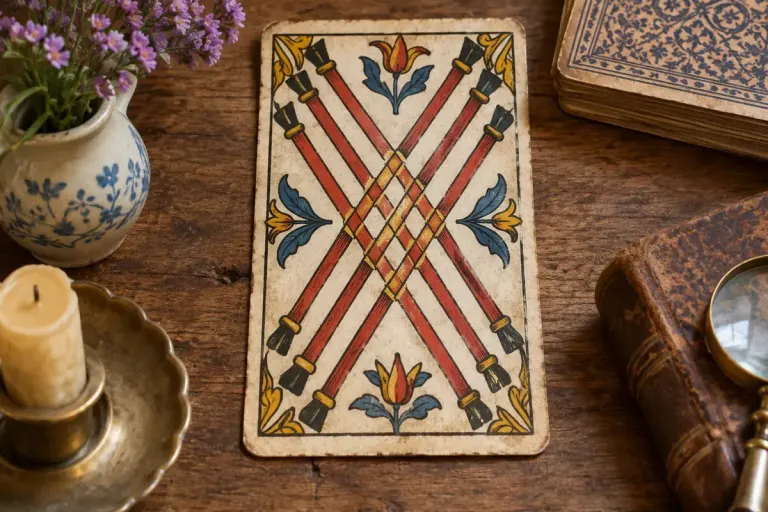
Study a Marseille-style batons card by tracing its rods, crossings and borders before adding a symbolic interpretation or a story.
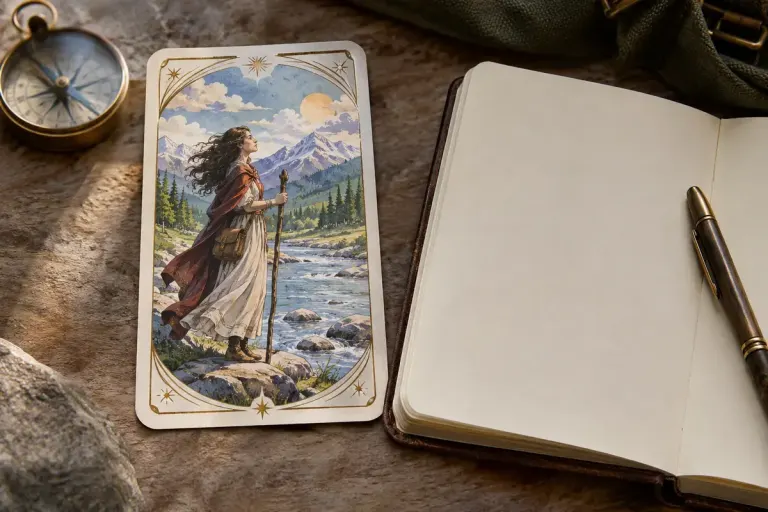
Explore the background of an illustrated tarot card as a reflective reading exercise, keeping observation separate from personal interpretation.
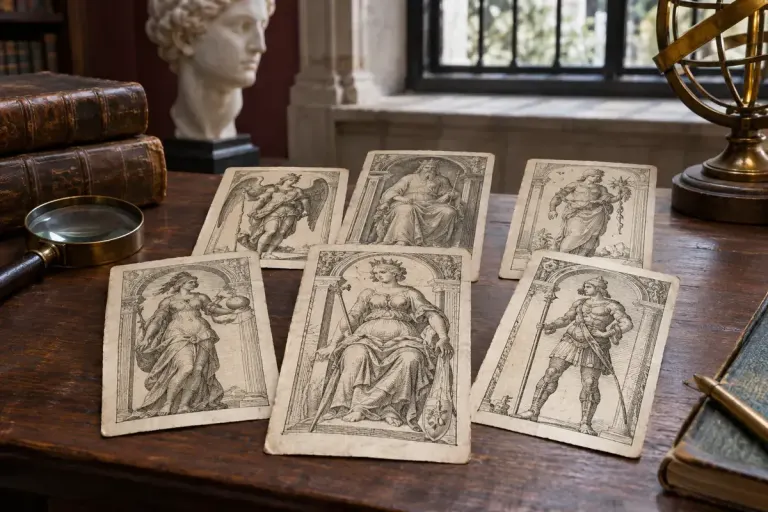
The name Mantegna Tarocchi can mislead a modern tarot reader. Explore the fifty engravings as a historical visual sequence with uncertain original use.