
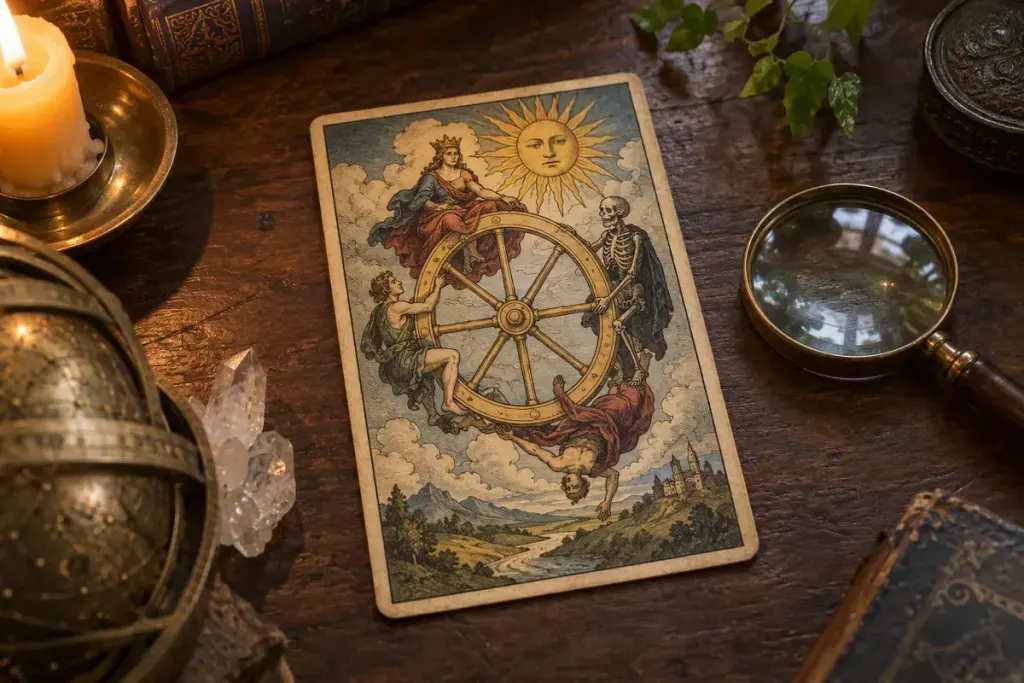
A wheel suggests movement even when the card itself is still. Figures may rise, fall, sit above it or stand outside it. Before opening a guidebook, spend a moment deciding what the picture actually shows and what you have supplied from memory.
The Metropolitan Museum of Art includes the Wheel of Fortune in its discussion of the historical structure of tarot. That historical setting is useful because today’s decks can reinterpret the imagery in very different ways. One modern illustration is not a universal key to every earlier card.
Describe positions before meanings
Divide a notebook page into observation and response. In the first column, describe visible details: which figures touch the wheel, whether the movement has a clear direction, and what remains still. In the second, record what those arrangements make you think about.
For example, a figure near the top may lead you to consider temporary advantage. That is your response to a visual arrangement, not evidence that a particular event will happen. Keeping the columns separate helps a reflective exercise remain honest about its limits.
Compare two editions slowly
Place two Wheel cards beside each other and identify one concrete difference. Perhaps one includes a surrounding landscape while the other isolates the wheel. Ask how that difference changes your attention. Check the deck’s author, illustrator and accompanying text before attributing the change to an entire tradition.
If you use a prompt, make it something you can answer from experience: “Which parts of this situation can I influence?” is more useful for reflection than asking the card to predict a date or outcome. Leave medical, legal and financial decisions to appropriate evidence and advice.
Finish by writing one sentence about the picture rather than a list of fixed keywords. Over time, this creates a record of how you look at images. The Wheel becomes a starting point for observation and thought, without needing to become a promise about the future.