
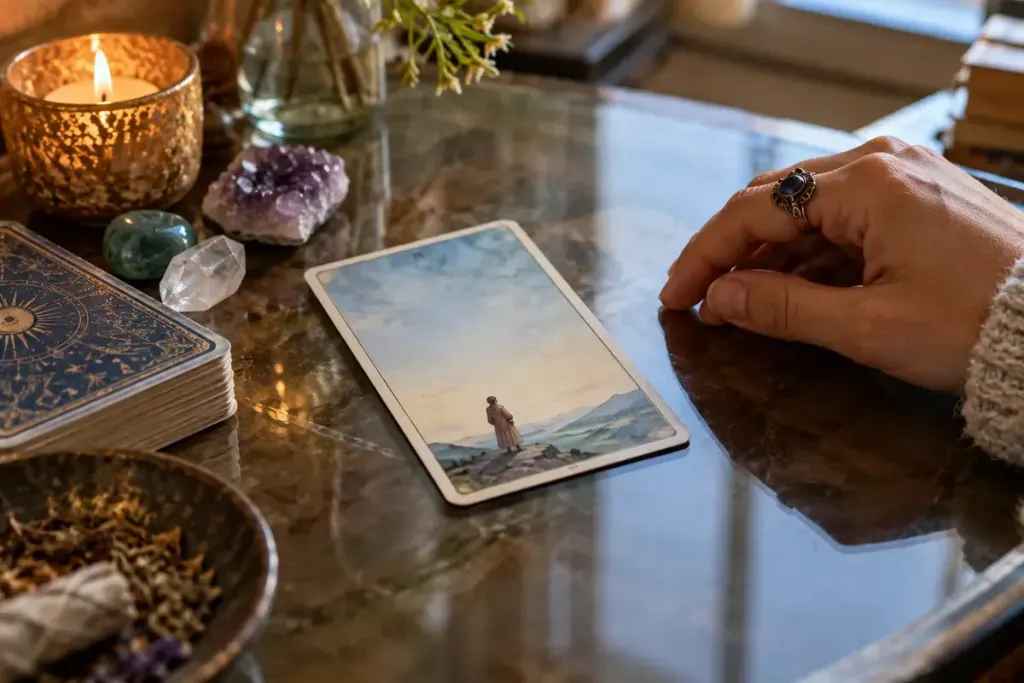
When looking at a tarot card, the figure, animal or bright symbol usually attracts attention first. Try looking instead at the area around it. An open sky, a stretch of plain ground or a gap between two figures can change the feeling of the scene without adding another object.
This is a visual reflection exercise, not a method for proving what will happen. Different decks use space differently, and your response to an image need not become a universal meaning assigned to that card.
Describe before interpreting
Choose one card and write three observations that another viewer could check: the figure occupies a small part of the image; the space above it is larger than the space below; the nearest object sits far to one side. Keep words such as lonely, free or threatened for a separate line.
Now ask what the arrangement suggests to you today. A large empty area might feel restful in one reading and uncertain in another. Record the association as your response, rather than attributing a single intention to the artist without evidence.
For an invented example, a traveller beside a wide plain could prompt a question about leaving room in a busy week. That does not establish that a journey is coming. It gives you a concrete subject for reflection: where have you left no space to pause?
Return to the complete image
After focusing on the empty area, look at the symbols and figures again. Has their relationship changed? Compare your note with the deck’s own guidebook if available, distinguishing its explanation from your personal association.
A useful journal entry can end with an ordinary action, such as leaving one evening unplanned or asking for more information before committing. Keep consequential medical, financial or legal decisions grounded in appropriate evidence and professional advice. The card can support a thoughtful question without being asked to provide a reliable prediction.