
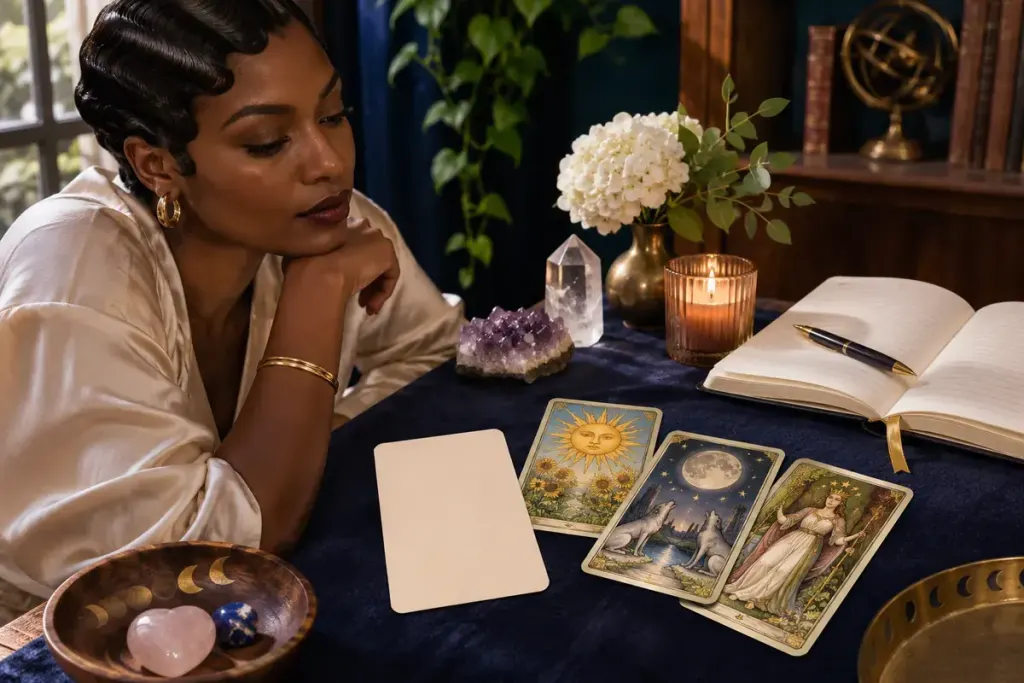
A plain card among richly illustrated tarot cards can feel like an interruption. For a reflective writing session, that interruption can be useful: it leaves a space where you choose the question instead of searching for another printed symbol.
First check the deck’s guidebook. An extra card may have a purpose specified by its creator, or it may simply be spare material. The exercise below is an original journaling suggestion, not a claim about a universal tarot tradition.
Decide what the blank means before drawing
Use a separate blank card if you prefer not to alter the deck. Give it one modest instruction, such as “Name what I do not know yet.” Write that instruction in your notebook before the session so its meaning does not change just to fit the answer you want.
Place it beside one illustrated card. Describe the image in ordinary language, then turn to the blank card and list what the picture cannot tell you about your real situation. That might include another person’s wishes, a missing practical detail or a decision that requires information from outside the reading.
For an invented example, a card showing a garden might prompt a note about making more space for a hobby. The blank card could then lead to: “I do not yet know where I could put a small worktable.” The useful next step is measuring the available corner, not treating the picture as evidence that the arrangement will fit.
Leave room to stop
You can also use the blank as permission to leave a question unanswered. Close the notebook if the exercise becomes repetitive or distressing. Reflection does not become more valuable merely because you keep drawing.
Keep tarot separate from medical, legal or financial decisions that require qualified advice and reliable information. It cannot establish another person’s thoughts or guarantee an outcome.
At the end, choose one sentence worth keeping and one practical fact worth checking. A blank card can be a gentle reminder that an honest gap is sometimes more useful than a confident story.