
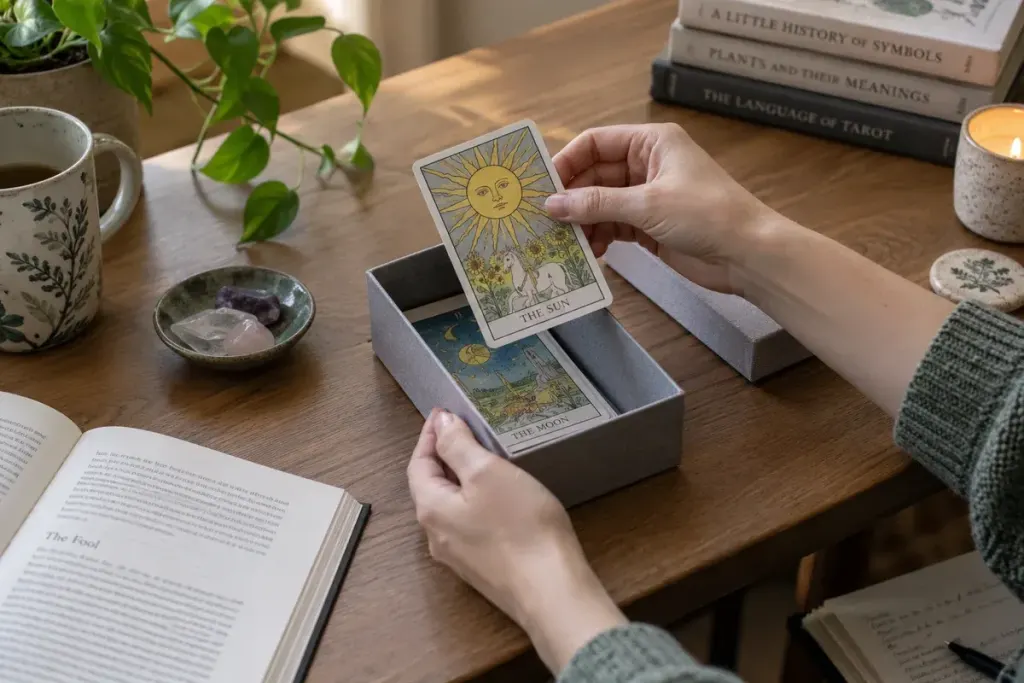
A favourite deck develops a history through use: softened edges, familiar images and perhaps one card that always catches on its box. Some wear is ordinary. Spilled tea, a damp windowsill or a tight rubber band creates a different kind of change.
Whatever meaning tarot has in your personal practice, the cards are also physical objects made from paper, coatings, inks and sometimes foil. Caring for those materials does not require a special ritual or an expensive collection of accessories.
Start with the place you use it
Choose a clean, dry surface and keep drinks at a sensible distance. Wash and dry your hands before handling the cards. If you use a cloth, check that it is clean and that loose fibres or decorative elements will not catch the edges.
The Library of Congress guidance for works on paper emphasises careful handling and a stable storage environment. Its preservation principles offer useful background, although a commercially coated deck may have care instructions specific to its materials.
Make the box fit the deck
A sound original box is often a practical starting point. A replacement should support the cards without forcing their edges or allowing them to slide around excessively. Avoid tight elastic bands, adhesive labels on the cards and improvised repairs that could stain or pull the surface.
Keep the guidebook and any title or edition information. If you collect several editions, a note on the outside of the storage container can prevent unnecessary searching and handling. Put the label on a suitable enclosure, not on the artwork itself.
Choose stable storage over decorative display
A sunny shelf, bathroom cupboard or damp basement may look convenient but expose the deck to conditions that do not suit paper. Store it away from direct sunlight, leaks and large environmental swings. Do not seal cards away while they are damp.
If a deck is valuable, unusually fragile or already damaged, seek a qualified paper conservator’s advice before cleaning or repairing it. Household sprays, oils and smoke treatments can leave residues; they are not substitutes for material-specific care.
Try a simple end-of-session habit: check the surface is clear, gather the cards gently and return the complete deck to its enclosure. That routine also makes the next session easier to begin. Looking after the object lets its images remain available for study and reflection without asking the paper to endure unnecessary damage.