
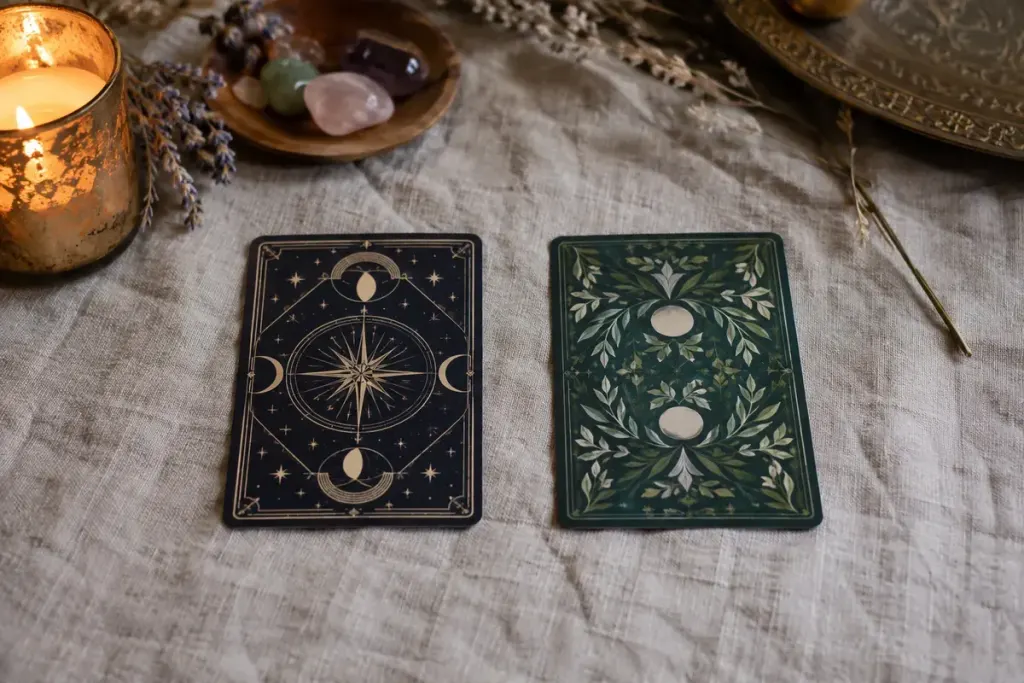
Before a tarot card is turned face up, its back may already tell you which way it is facing. A small moon at one end, a signature or an asymmetric border can make orientation visible even when the central pattern looks balanced.
This is a design observation, not a statement about a deck’s spiritual value. It matters most when you use reversed cards and prefer not to know their orientation before drawing.
Place two cards face down beside each other. Rotate one through 180 degrees. Compare the corners, border, central emblem and any lettering. A back with rotational symmetry looks the same after that turn; a directional design supplies a clue.
Check more than one card. Wear, a bent corner or a different shade can identify an individual card even when the printed design is symmetric. Inspect a used deck in ordinary light without treating normal wear as a mysterious sign.
Decide whether the clue matters to your practice
If you read every card upright, a directional back may be convenient. If you include reversals, you might choose to look away while drawing, use a different selection method or simply accept that the design provides information. There is no need to invent a rule that every reader must follow.
For a study journal, separate two observations: what the artwork visibly does and what meaning you choose to explore. “The top border reveals orientation” is a description. “This changes how I approach the card” is your response.
When buying a deck, look for a photograph of the backs as well as the face illustrations. Card size, finish and legibility may matter more to daily use than a striking promotional image.
Keep tarot in the role you have chosen for it, such as reflection, art study or storytelling. A concealed orientation does not turn a draw into reliable evidence about future events or replace a practical decision.