
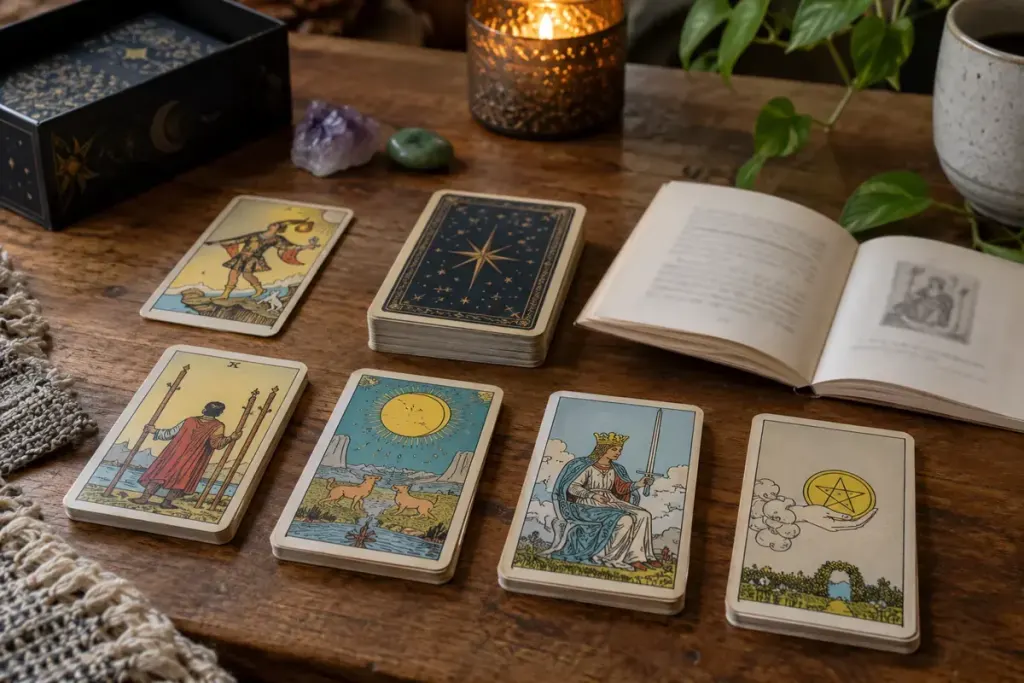
You open a tarot deck and find more cards than expected. One may be an alternate illustration, an artist’s card, a spare or an intentional addition to the deck’s system. Its presence in the box does not tell you how the creator intended it to be used.
Start with the contents list and guidebook. Keep the cards in order while checking them so you can distinguish an extra card from a missing or duplicated card in the main sequence.
Identify the card’s purpose
Look for a title, number or explanation that connects it to the deck. An alternate version may be intended to replace another card rather than accompany it. A promotional insert may share the same card stock without belonging to the reading set.
If the guidebook is unclear, consult the publisher’s official information for the exact edition. Avoid assuming that advice about a different printing applies to yours.
Make an intentional choice
For a reflective exercise, you might use the standard set first and study the optional card separately. Ask what its imagery adds and whether the guidebook gives it a defined role. Record your decision so later journal entries remain understandable.
If you include an extra card, explain that choice before a shared session. Agree what happens if it appears rather than inventing a rule only after someone draws it. There is no need to treat the card’s appearance as proof of a prediction or an external message.
Keep unused extras safely with the guidebook. They can be useful for comparing illustrations or learning about the artist’s process even when they stay outside the shuffled deck.
The rewarding part is noticing how a deck was designed and how you choose to engage with it. A clear account of that choice gives your practice continuity without requiring every printed insert to carry the same symbolic weight.