
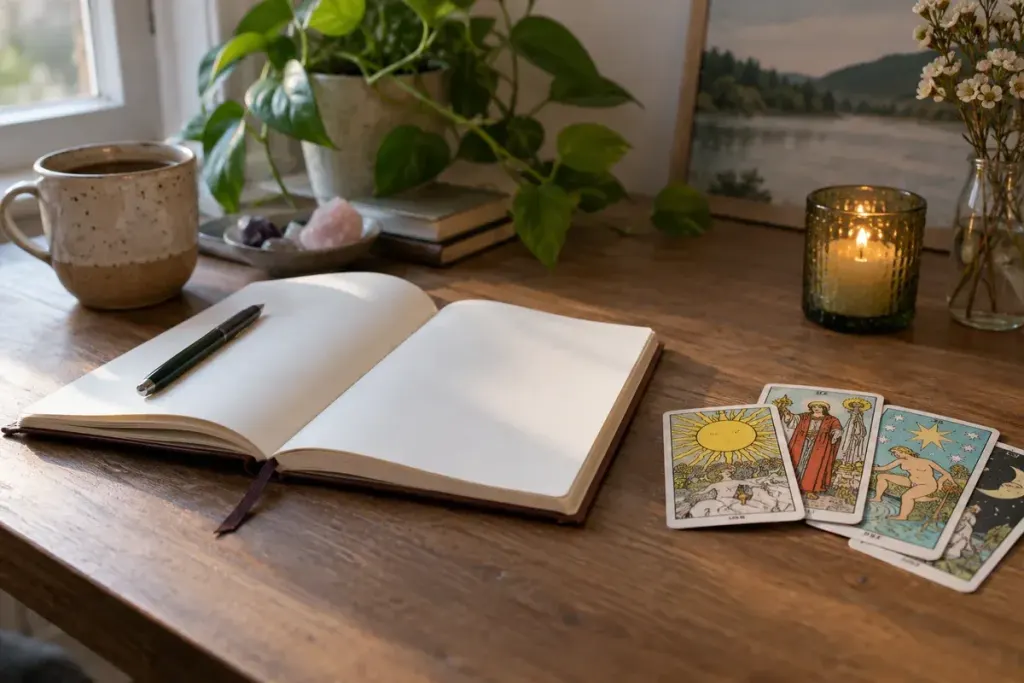
A new tarot deck can feel like seventy-eight unrelated pictures. Sorting it by structure offers a calmer first encounter than trying to memorise a meaning for every card.
The Victoria and Albert Museum’s history of tarot describes a conventional deck of 78 cards, with 22 major-arcana cards and 56 minor-arcana cards. Modern artistic decks can depart from conventions, so check the guide supplied with the particular deck.
Sort before interpreting
Separate the major arcana from the suit cards. Within each suit, arrange the numbered and court cards in their indicated order. Notice the repeated objects, colours and visual motifs. At this stage, record what is present rather than assigning predictive significance.
Choose one suit and compare the way its repeated symbol is arranged across the cards. Some decks use scenes; others present a more pattern-based composition. Ask what the design makes easy to recognise and where you need the accompanying guide.
Make a map of this deck
Write the suit names, court titles and any renamed major cards in a short reference sheet. Do not assume another deck uses identical terminology. If the creator explains a deliberate change, distinguish that explanation from an association you make yourself.
For a study session, select three cards from one group and describe their visual relationships in a few sentences. You might notice increasing density, changing direction or a recurring figure. Those observations support discussion of the artwork without claiming that the sequence predicts a life event.
Keep cultural or historical claims tied to a reliable source, and avoid presenting a personal interpretation as universal tradition. The useful result is familiarity with the deck’s organisation. Once you can find your way around it, individual images have a context rather than feeling like isolated symbols with a single required answer.