
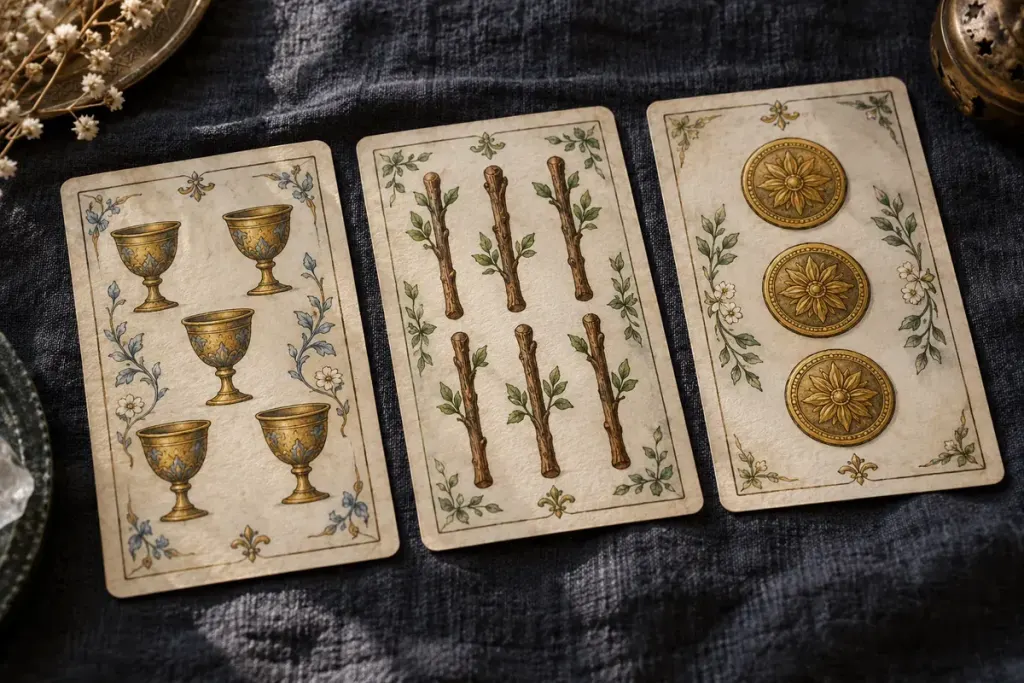
A five of cups can show a small scene with a figure and a landscape, or it can present five cup symbols in an arrangement. Those cards may share a suit and number while inviting quite different kinds of looking.
Numbered suit cards are often called pip cards. Some tarot traditions use repeated suit emblems rather than a fully illustrated narrative scene. Decks vary, so examine the actual images and their accompanying guide rather than assuming every deck follows one model.
Begin with the arrangement
Choose a card from a deck you own or an authorised image. Count the symbols, notice symmetry and look at the spaces between them. Are they grouped tightly, separated or framed by decorative lines? Write a plain description before consulting a meaning.
For an original reflection exercise, imagine five identical cups arranged as four corners and a centre. You might use that arrangement as a prompt about a group and its focus. That interpretation is your exercise, not a historical claim about every five of cups.
Notice what a scene supplies
An illustrated narrative card may already suggest an action, mood or relationship. A pip arrangement leaves more of that narrative work to the reader. Neither is automatically deeper or easier; the difference changes what you need to study.
Compare two cards with the same number and suit. Make separate columns for visible details, the guidebook’s explanation and your own response. Keeping those categories apart prevents a personal association from becoming an asserted traditional rule.
Use the deck’s own context
Check the creator, edition and stated tradition. Decorative details can be deliberate artistic choices, reproductions or modern additions. If you want to make a historical claim, consult a reliable catalogue or specialist source for that particular deck.
Keep tarot within the purpose you have chosen, such as visual study, storytelling or reflection. Cards do not establish medical facts, financial outcomes or another person’s private intentions. A pip card can be interesting precisely because it slows the rush to a ready-made story and asks you to look at the page first.