
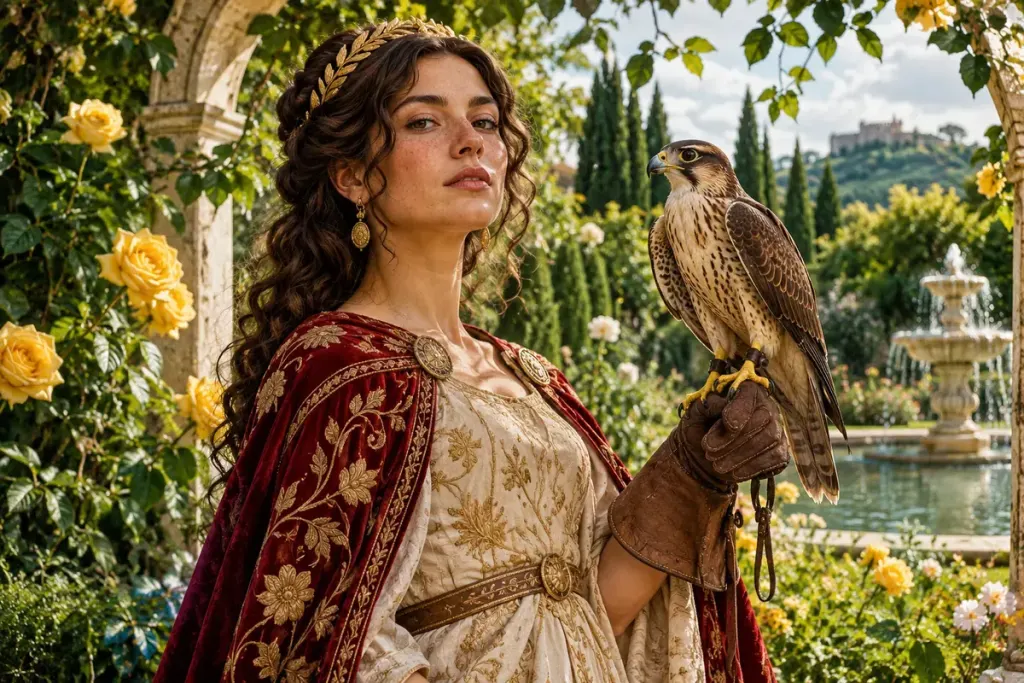
The Nine of Pentacles is easy to reduce to a single word such as abundance. Spend another minute with the Rider–Waite–Smith image, though, and the setting becomes more interesting: cultivated plants, a composed figure and a bird resting on a wrist. The scene invites a slower reading than “money is coming.”
In A. E. Waite’s description of the card, the garden and house suggest material comfort, while his listed associations include accomplishment and discernment. These are historical interpretive conventions, not evidence that a card predicts financial events. The hooded bird, commonly identified as a falcon in readings of the image, also offers a visual starting point for thinking about attention and restraint.
Separate observation from interpretation
Make two short columns in a notebook. In the first, write only what you can point to: the grapes, clothing, bird and distance between the figure and the house. In the second, write possible associations. A tended garden might suggest sustained care; comfortable clothing might suggest enjoying the result of effort. Those are interpretations you are proposing, not additional facts printed on the card.
This distinction helps when a guidebook gives a meaning that does not fit your question. You can examine how that meaning was reached instead of either accepting it automatically or abandoning the image.
A useful reflective question
Try asking, “What have I already built that deserves maintenance?” An answer might concern a reading habit, a quiet room or a reliable friendship. It need not be about wealth. Add one practical action beneath the reflection, such as protecting an hour that usually gets crowded out.
If your deck redraws the card, describe its actual details before borrowing symbolism from another edition. A missing garden or different animal changes the visual conversation. Use the exercise for reflection and storytelling; let real financial or health decisions rest on relevant information and professional advice.