
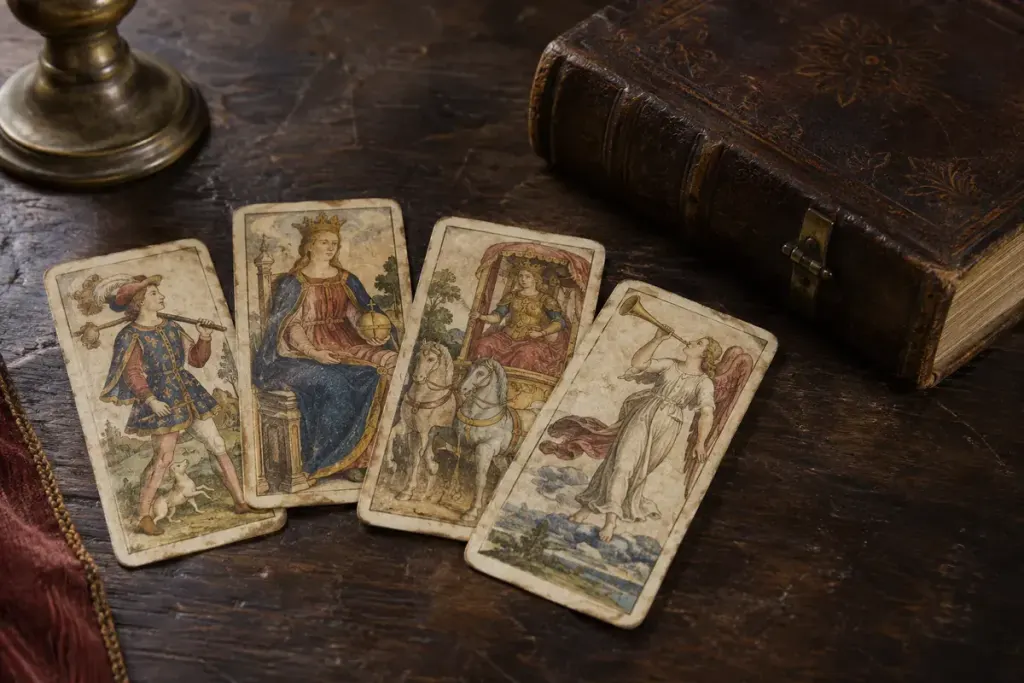
The word trionfi opens an interesting route into early tarot: look at the images as part of a culture fascinated by triumphs, processions and personified ideas. A chariot or crowned figure can then become a subject to study before it becomes a message to interpret.
The Morgan Library & Museum’s Tarot! Renaissance Symbols, Modern Visions places early cards alongside Renaissance visual culture. Its displayed material includes a manuscript of Petrarch’s Triumphs as well as historical cards. That juxtaposition invites comparison; it does not mean every card can be assigned a single direct literary source.
Compare how an idea is made visible
Choose one historical card image and one museum image of a triumphal scene. Begin with a plain description. Is the central figure standing, enthroned or moving? Are other figures watching, following or beneath it? Which objects signal authority, time, virtue or victory?
Keep your observations in one column and possible interpretations in another. “A figure holds a wheel” records something visible. “The wheel represents this precise belief” requires an argument and a source. The distinction makes visual study more interesting because it leaves room for questions rather than forcing an immediate answer.
Let the object’s record set the limits
Check the museum’s date, location, attribution and description. A later reproduction may preserve an image while changing its colours, scale or presentation. Record which object you actually studied, especially if several decks use a similar figure.
You can then compare the historical image with a modern deck you own. Ask what the later artist retained, removed or emphasised. A change in posture or surrounding figures may alter the feeling of the image even before a guidebook supplies a meaning.
This is a reflective art exercise, not evidence that the cards predict events. The value lies in looking closely at how people give abstract ideas a visible form—and in noticing when a modern interpretation adds something that the surviving historical object does not itself establish.