
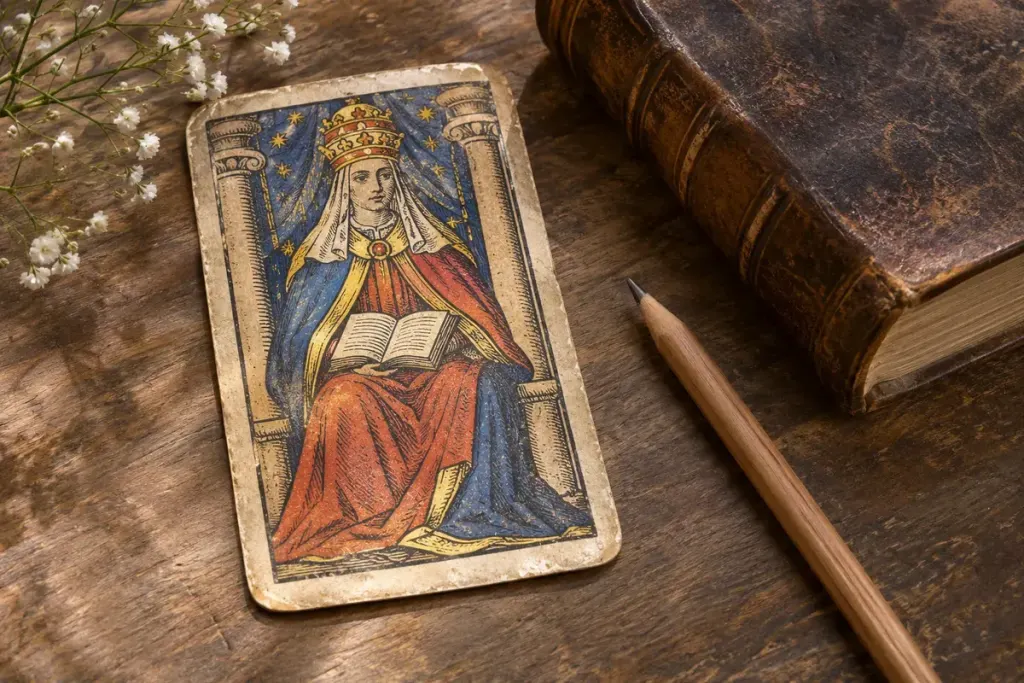
A book rests in the Papess’s hands, but the picture does not arrive with a single compulsory interpretation. Before deciding that it means hidden wisdom, study how the particular artist has drawn it. Is it open? Where is the figure looking? Can you see writing, page edges or only a coloured rectangle?
The exercise matters because tarot decks borrow from different visual traditions. Details familiar from a High Priestess card should not automatically be imported into every Papess image. In a Tarot Heritage discussion of a Marseille reading guide, Sherryl E. Smith points out how interpretations can refer to features absent from the deck being discussed.
Make three kinds of notes
Divide a page into observation, published interpretation and personal association. “An open book lies across her lap” belongs in the first column if that is what you can see. An explanation attributed to the deck’s creator belongs in the second. “This reminds me of a subject I keep meaning to study” belongs in the third.
Keeping those columns separate does not make a reading less imaginative. It makes the imaginative part easier to recognise. You can explore a personal response without presenting it as a documented historical meaning.
Compare without forcing agreement
Place two Papess cards side by side, or use two clearly identified reproductions. Choose only one feature for comparison: the position of the book. Write a sentence about how each arrangement directs your attention. Then consult the accompanying guidebooks and note where their explanations differ from your initial response.
A useful reflective question is, “What am I learning, and what am I merely assuming I already know?” Treat that as a journalling prompt rather than a prediction or an instruction to make a consequential decision. The book becomes an invitation to look more carefully—first at the image, then at the claims you attach to it.