
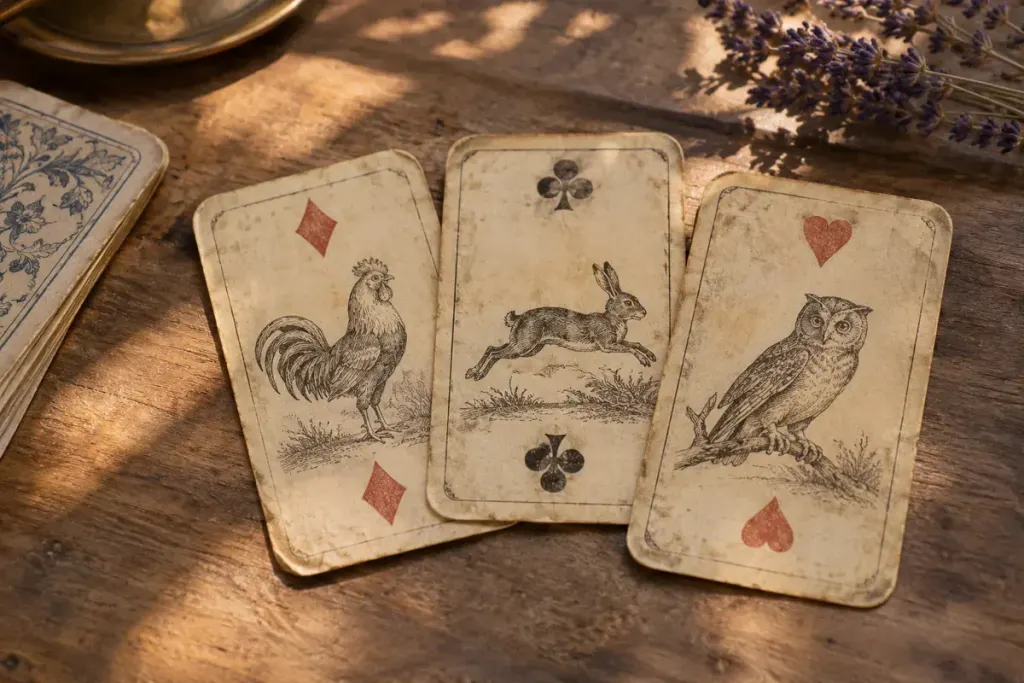
A bird or a lion on an old tarot trump can look like the beginning of a symbolic reading. Before assigning it a modern meaning, check what kind of pack it belongs to. Historical animal tarot decks were also objects for playing games, with structures that need to be read alongside their pictures.
The V&A’s history of tarot cards includes animal tarot among eighteenth-century developments. The International Playing-Card Society’s Bavarian Animal Tarot record gives a more specific pattern identification. Together, they provide a better starting point than treating every animal card as a version of a familiar modern oracle deck.
Identify the pack before interpreting a creature
Look first at the suit signs, court cards, trump numbers and any maker’s details. These features can distinguish a historical playing pattern from a contemporary deck inspired by animals. A seller’s broad description may not capture that difference.
Then compare several trumps. Are the creatures shown singly or in pairs? Does the image read from one direction or both? Are the numbers integrated into the picture or placed in separate panels? These are observable design questions; they do not require inventing a hidden intention for the maker.
Keep observation and reflection in separate notes
For a personal study exercise, make two columns. In the first, record what the card visibly contains. In the second, write the associations it brings to mind. “Two birds face one another” belongs to the first column; “this makes me think about negotiation” belongs to the second.
That separation lets the image support creative reflection without presenting a personal association as documented history or a prediction. If the historical context interests you, record the museum or collection reference beside your notes.
The unfamiliar animals can make these packs rewarding to study. Their interest grows when the game structure, printing choices and individual pictures remain visible, instead of being forced immediately into another deck’s meanings.