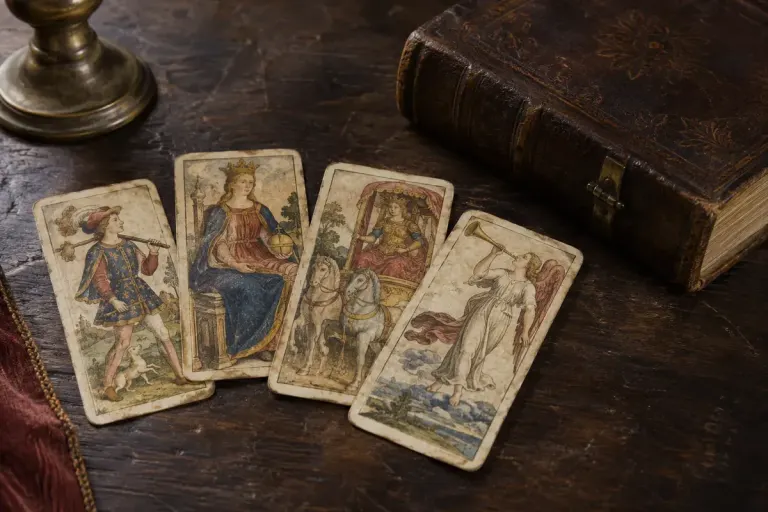
Tarot and Visual Culture
Trionfi: The Triumph Cards That Helped Shape Tarot
Explore the idea of triumph in early tarot imagery through museum collections, while keeping historical evidence separate from later reading traditions.

A thoughtful space for symbols and self-reflection.
Explore the idea of triumph in early tarot imagery through museum collections, while keeping historical evidence separate from later reading traditions.
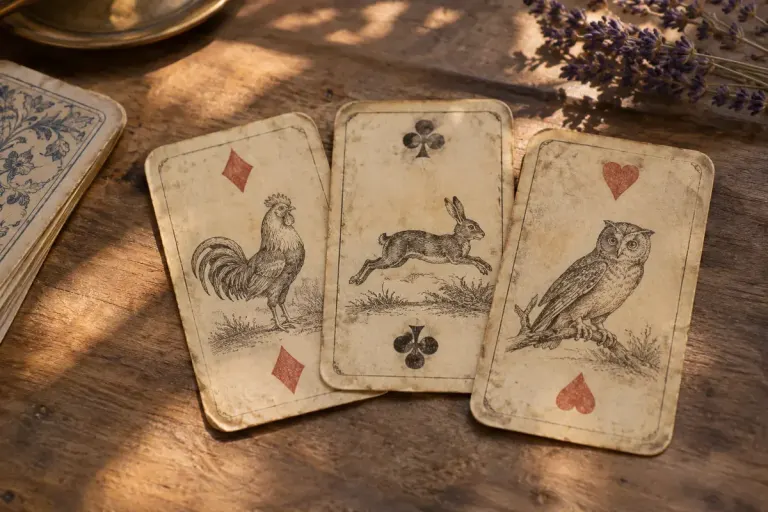
Animal tarot decks replace familiar allegorical scenes with creatures while keeping a playing-card structure. Look at the suits and numbering before interpreting images.
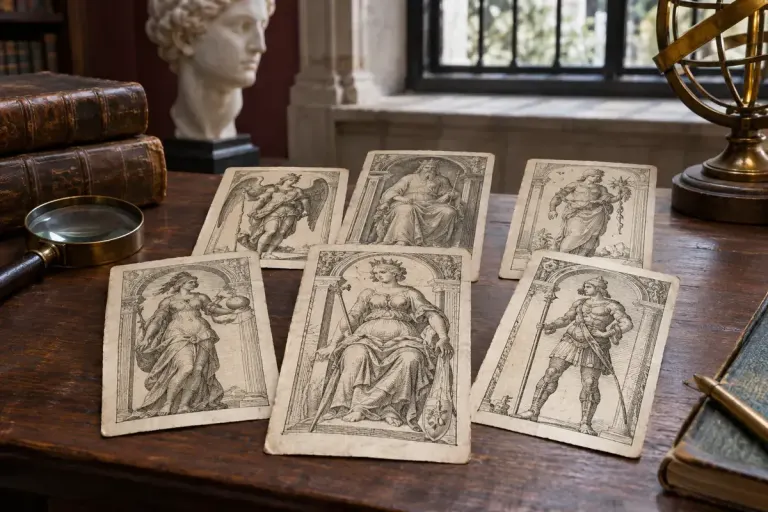
The name Mantegna Tarocchi can mislead a modern tarot reader. Explore the fifty engravings as a historical visual sequence with uncertain original use.
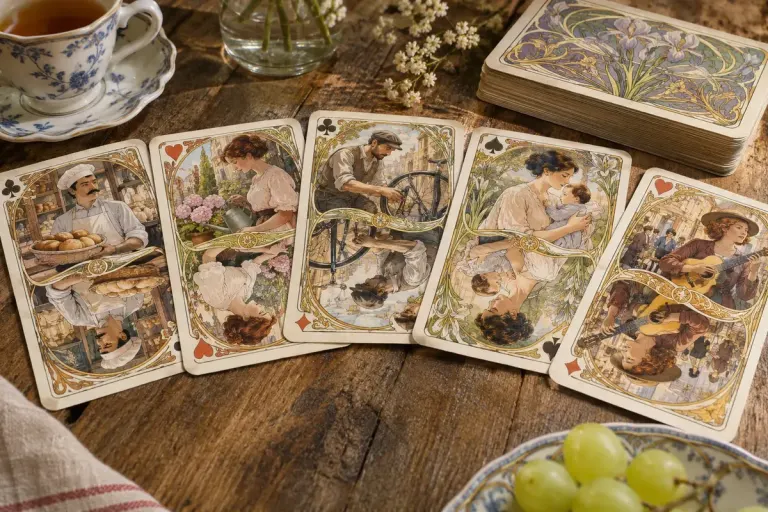
Tarot Nouveau offers everyday scenes and playing-card suits. Look at the deck’s purpose before borrowing meanings from another tarot tradition.
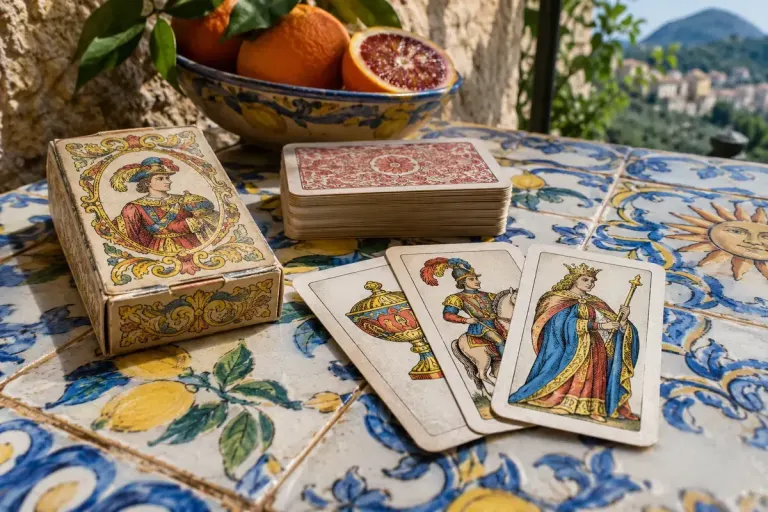
Discover the distinctive size and structure of Tarocco Siciliano, and learn why the cards in a box and those used in a local game may differ.
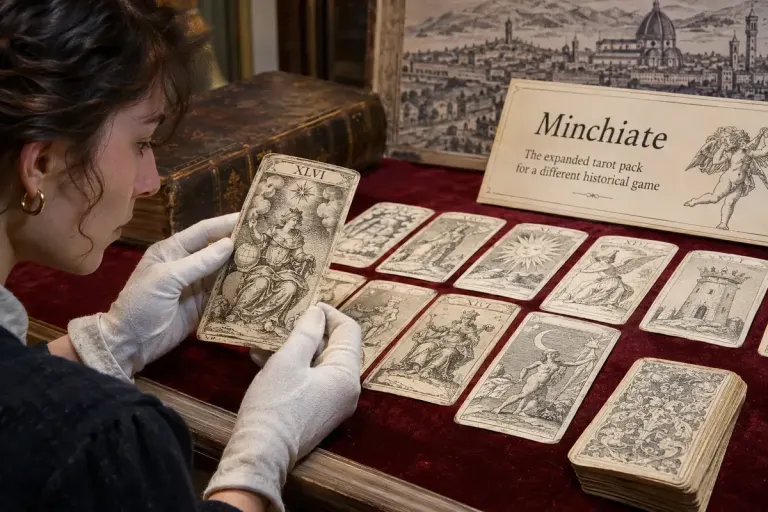
Minchiate’s expanded historical pack includes virtues, elements and zodiac imagery. Learn how to approach it without forcing a familiar 78-card structure.
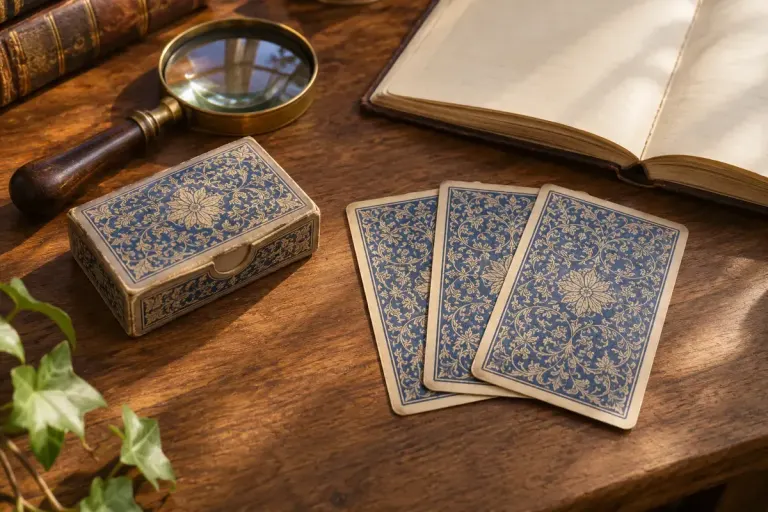
The letters in a 1JJ tarot deck refer to Juno and Jupiter. A museum example offers a useful way into tarot’s varied naming and visual traditions.
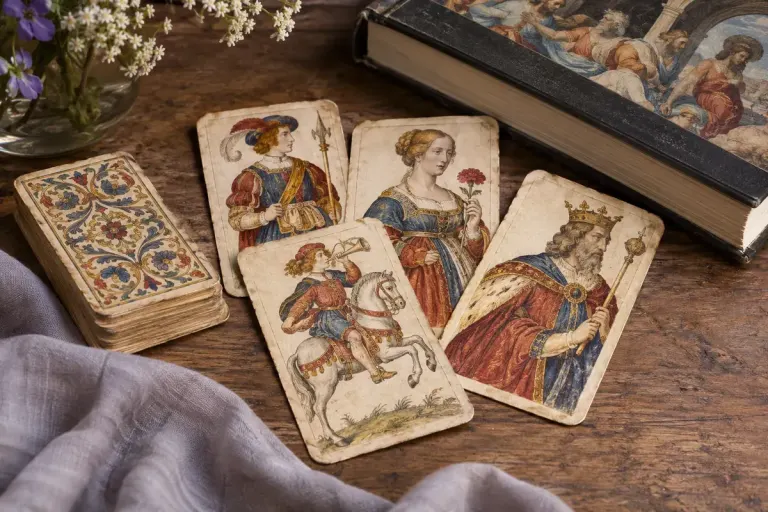
Explore the Sola Busca tarot deck as a historical artwork, and learn how to distinguish a museum record from a modern reproduction or interpretation.
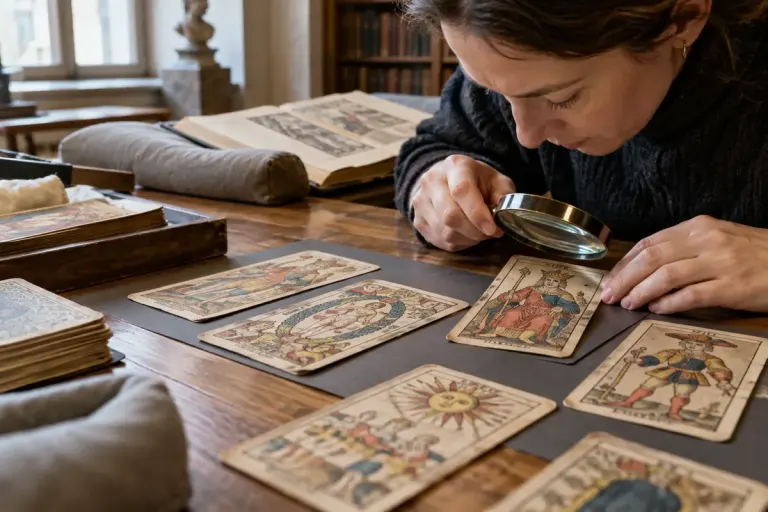
Explore tarot as a printed object by comparing line, colour and catalogue descriptions without treating a modern reproduction as an original artefact.