
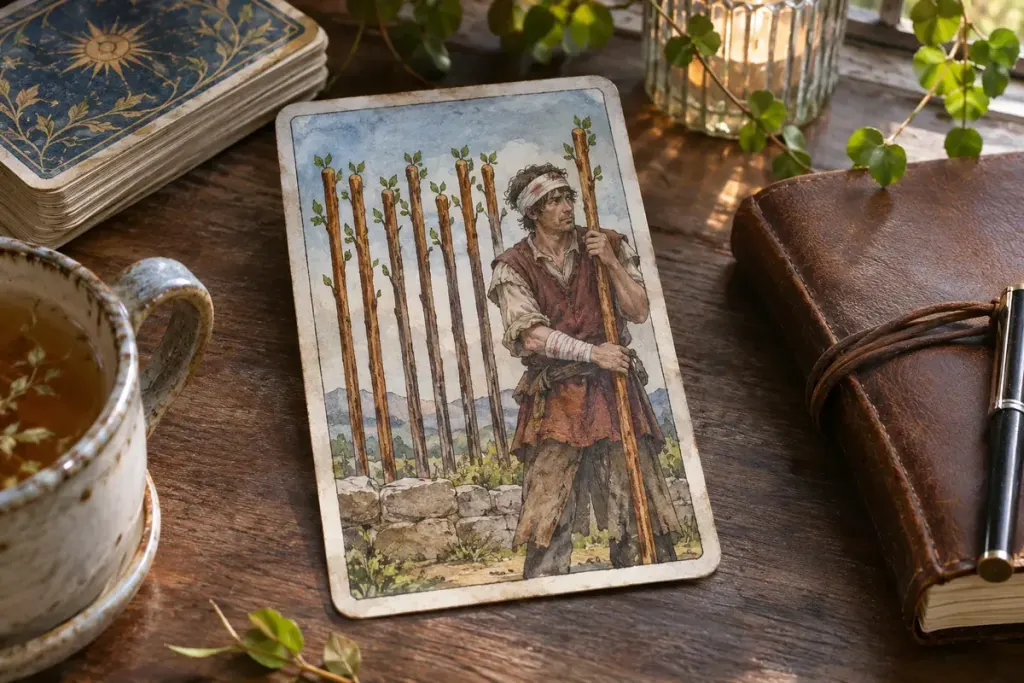
The Nine of Wands offers a useful exercise in looking before interpreting. In the familiar Waite–Smith image, one figure stands with a wand while the remaining wands form a line behind. The scene can suggest endurance, vigilance or a boundary, but those readings begin with visible choices in the picture.
Separate the image from the story you add
A. E. Waite’s historical description in The Pictorial Key to the Tarot, reproduced here associates the card with strength in opposition and describes the figure’s expectant stance. This is evidence of an author’s interpretation within a particular tarot tradition, not evidence that a card predicts events.
Try making two columns in a notebook. In the first, record only what you see: the position of the hands, the direction of the gaze, the upright wands and the spacing between them. In the second, write what those details suggest to you. “The figure looks sideways” is an observation; “the figure cannot trust anyone” is a story you have supplied.
What kind of boundary is it?
Imagine the row of wands as a fence, a reserve of tools or a backdrop. Each possibility changes the mood without changing the marks on the card. You do not have to choose one permanent meaning. The exercise shows how quickly a visual arrangement acquires emotional language.
For reflective writing, use a modest prompt: “What am I continuing, and what would make it easier to continue?” A second prompt might be, “Is this boundary helping me rest, or keeping me on watch?” Treat the answers as your own thoughts, not instructions issued by the deck.
Compare another artist’s version
Look at a second Nine of Wands and note what disappears or changes. A deck may replace the human figure, soften the barrier or use a completely different scene. That comparison makes the artwork’s role clearer. It also gives you a useful record of why one deck feels encouraging while another feels tense, without ranking either as a more accurate guide to your future.