
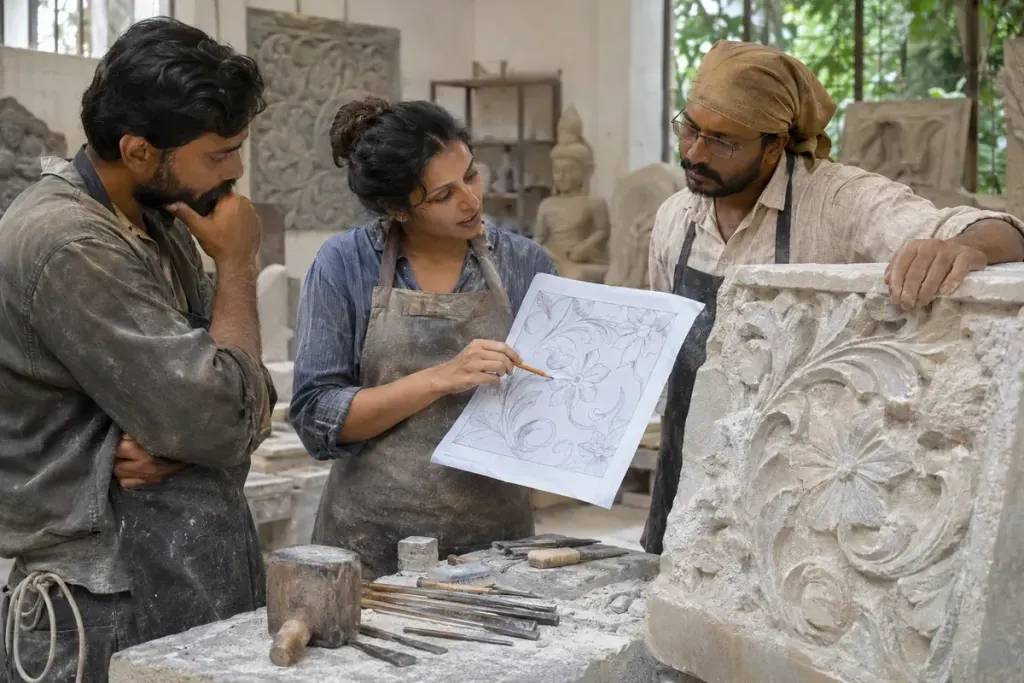
A craftsperson stands above two other figures beneath a decorated arch. In the familiar Waite–Smith Three of Pentacles, work is taking place in a space shared with other people. Before reaching for a keyword such as “teamwork”, look at how the scene brings skill, plans and conversation together.
Waite’s description of the Three of Pentacles identifies a sculptor working in a monastery and connects the card with skilled labour. That is a historical interpretation associated with this deck. It does not establish that every tarot tradition uses the same scene or that drawing the card predicts a workplace event.
Read the arrangement of the figures
Notice the raised position of the worker and the direction of the other figures’ attention. Look at the architectural setting and the object held between the visitors. Write down what your particular edition actually shows before deciding who has authority or what anybody is saying.
A useful sketch needs only three figures and a few arrows showing their lines of attention. Which person appears to be demonstrating something? Which might be bringing information? Where would your imagined conversation begin? Keep these as questions rather than treating a modern job title as part of the original picture.
Turn the scene into a practical reflection
Choose a modest shared task from your own life: preparing an event, repairing an object or making a presentation. List the skill the task needs, the information the participants need to exchange and the point at which somebody should review the work.
Then ask whether those roles are clear. A person may have the practical skill but lack a usable brief. Another may understand the aim without knowing the limits of the materials. The card can provide an image for thinking about that exchange without claiming to reveal anybody’s hidden intentions.
Keep your response separate from the source
In a journal, give the historical description and your present-day reflection different spaces. Date your own response and name the edition you used. A later reading may notice another detail or suggest a different question.
The value of this exercise lies in making collaboration concrete: what is being made, what each person contributes and what needs to be discussed. The artwork becomes a prompt for observation and conversation, while decisions remain grounded in the people and circumstances involved.