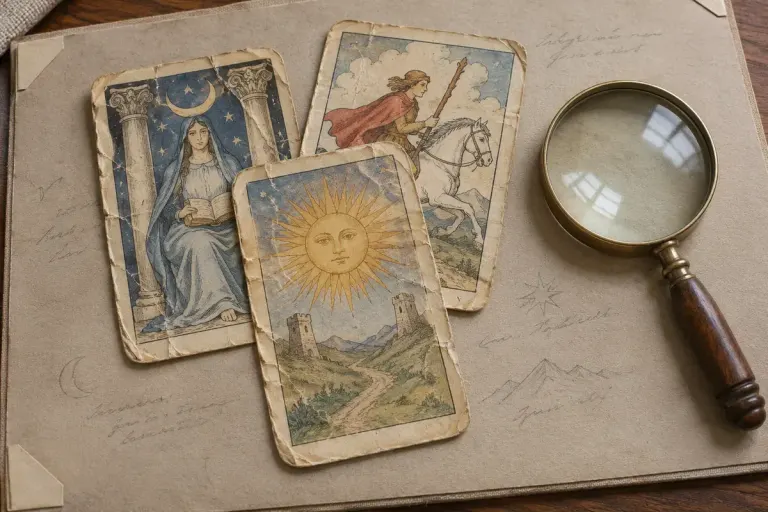
Cards as Images
Annotations on old tarot cards tell a reader’s story as well as a deck’s
Handwritten notes on an old tarot deck can be fascinating. Separate visible annotations from guesses about their author, date and intended meaning.

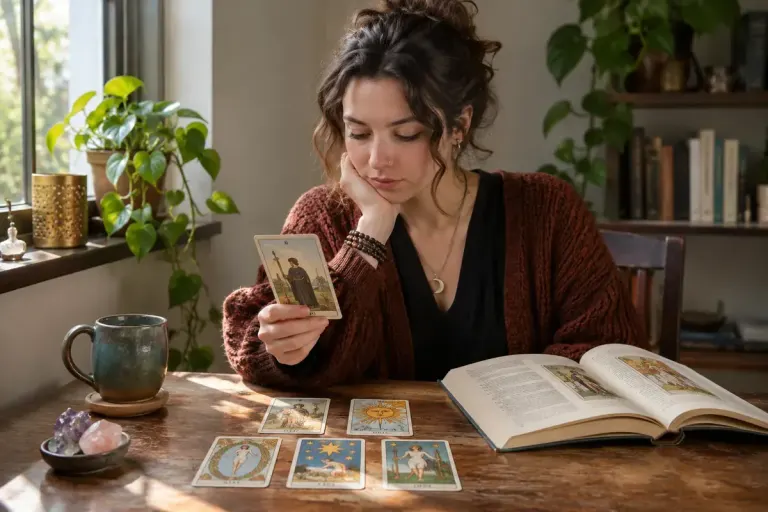
A thoughtful space for symbols and self-reflection.
Handwritten notes on an old tarot deck can be fascinating. Separate visible annotations from guesses about their author, date and intended meaning.
Study the rose, banner and movement in the Rider–Waite–Smith Death card, while keeping an author’s symbolism separate from predictions about real life.
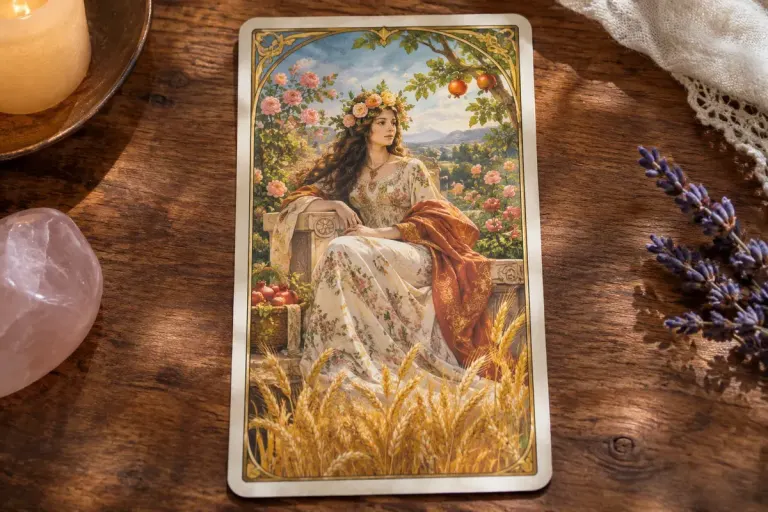
Look closely at the Empress card as an image of cultivation, comfort and attention, with reflective prompts rather than predictions.
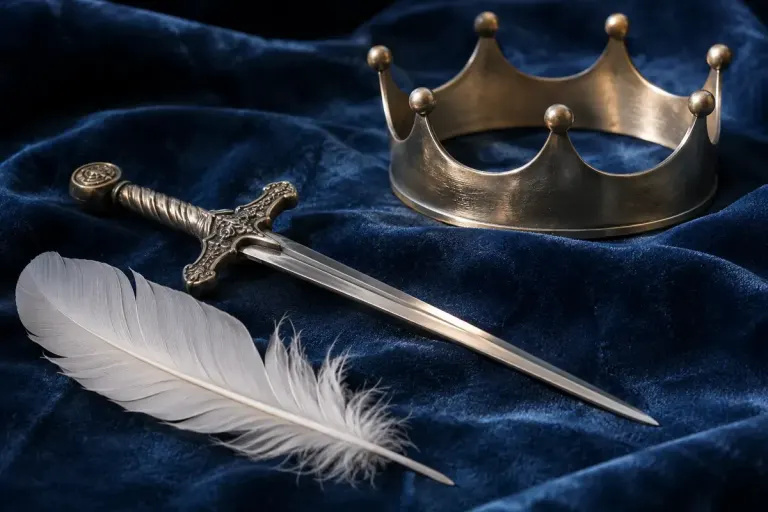
Use the Queen of Swords as a reflective prompt for clear boundaries while separating your interpretation from historical tarot meanings.
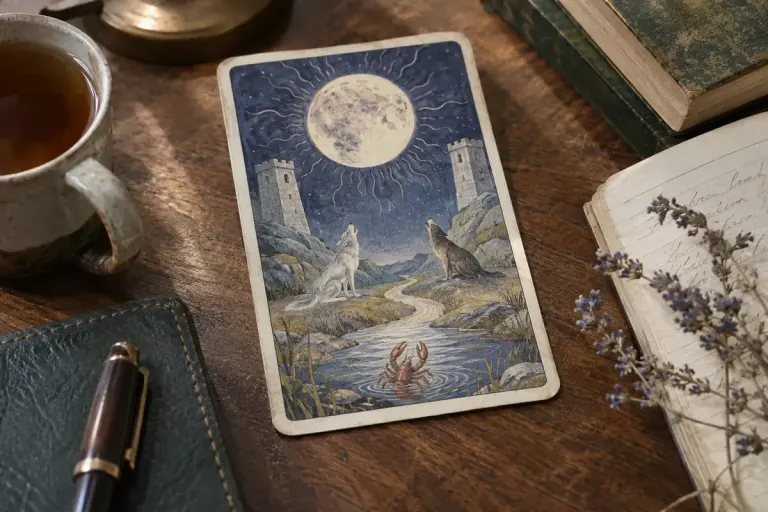
Study the Moon card through its path, towers and water before reaching for a fixed meaning. Use the image as a prompt for observation and reflection.
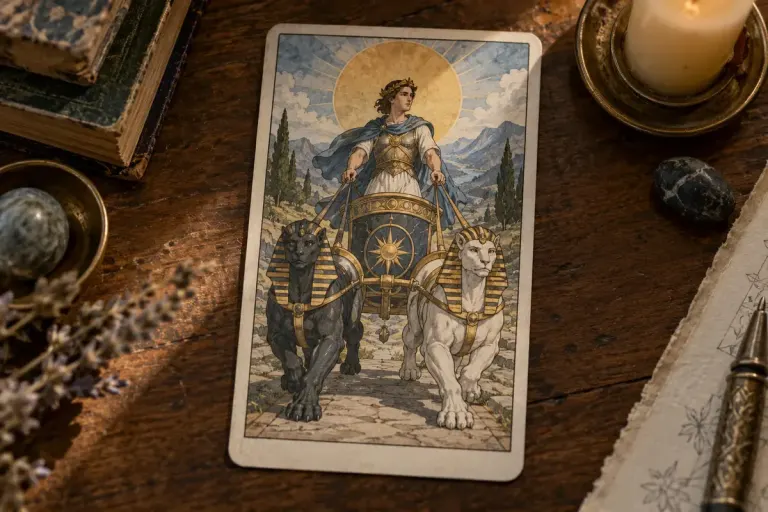
Study the paired figures on the Chariot as a visual exercise in direction, balance and tension, while keeping observation separate from prediction.
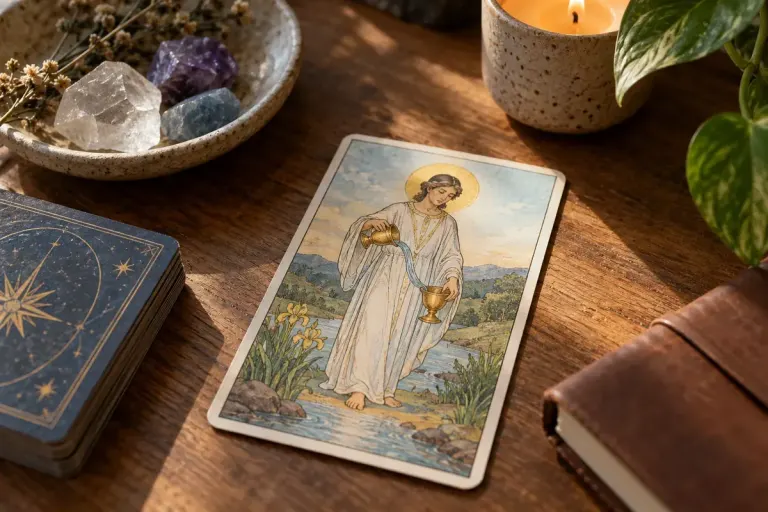
Study the vessels, gesture and direction of pouring in Temperance imagery, then turn the observation into a reflective question rather than a prediction.
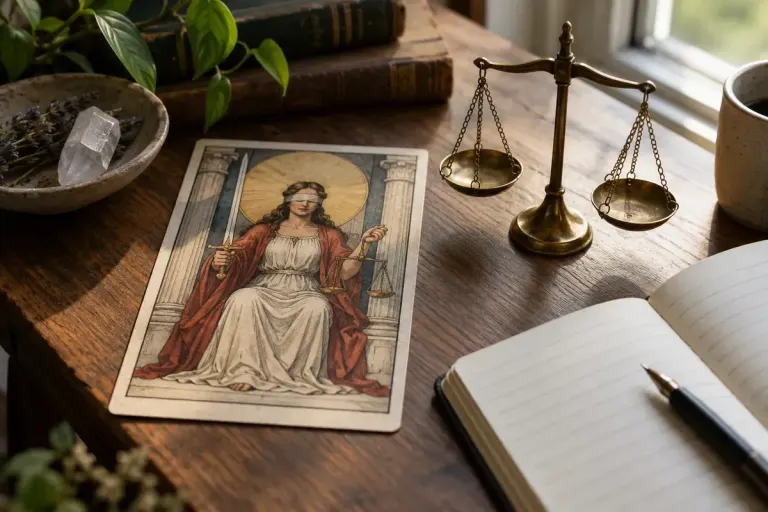
Read Justice’s scales as an image before assigning a fixed meaning. A close-looking exercise turns the card into a prompt for thoughtful comparison.
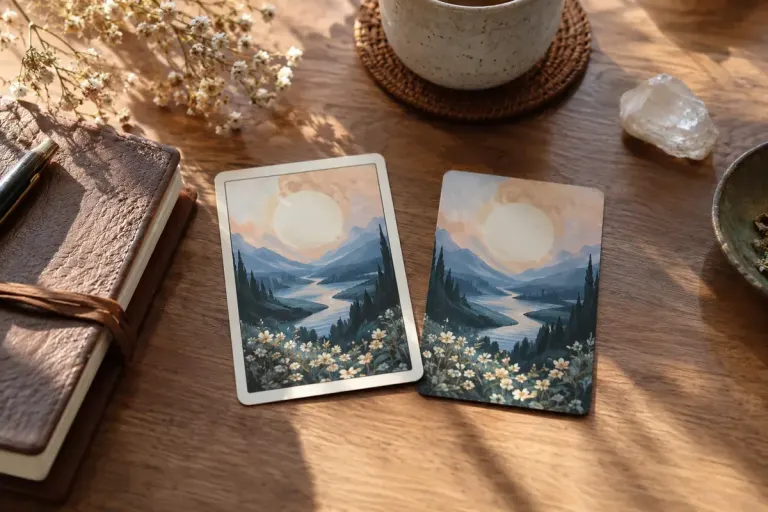
Compare bordered and borderless tarot artwork as visual compositions, without assuming the edition changes a card’s fixed meaning.