
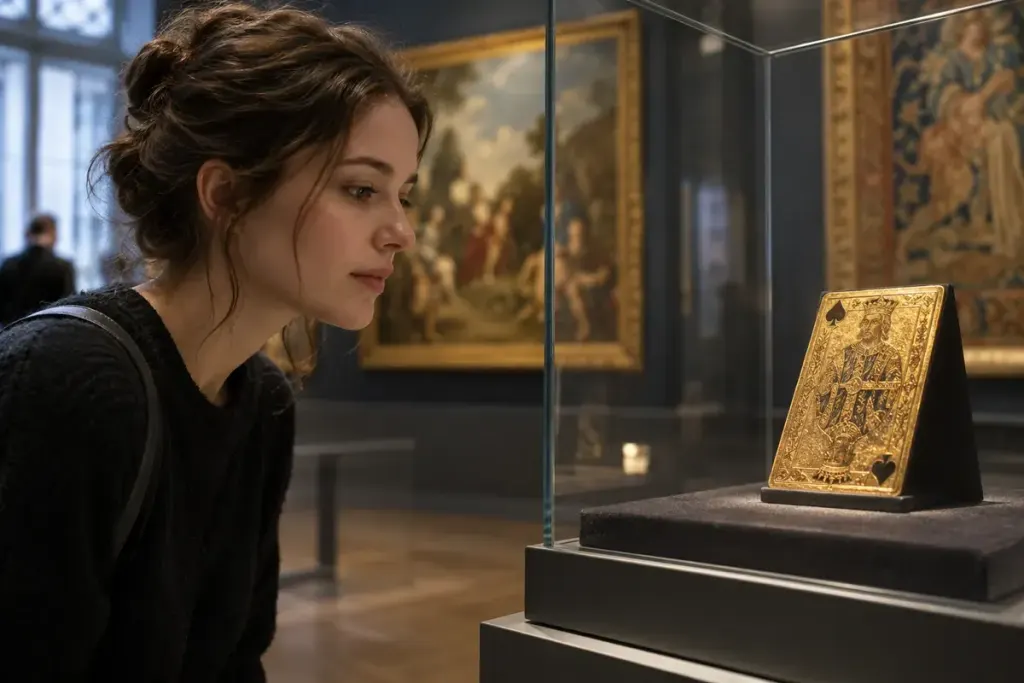
A gold background on a tarot card catches the eye before its figure does. In a historical luxury deck, that surface also raises questions about labour, materials and the people for whom the cards were made.
The Morgan Library’s Visconti-Sforza catalogue record connects family emblems on the cards with their patronage, while keeping some attribution and dating questions open. Its conservation explanation of card-making describes the workshop methods used to produce these elaborate objects.
Describe the surface before interpreting it
When studying a museum image, start with what the record actually identifies: the support, paint, metallic leaf and any worked decoration. A photograph of gold-coloured printing in a modern deck is not evidence that the original technique survives in that copy.
Separate three notes: visible detail, catalogue statement and your interpretation. For instance, you may see a repeated emblem, read that the catalogue associates it with a family, and then ask how the card presented status. Those are connected steps, but they are not the same kind of evidence.
Keep patronage and symbolism in conversation
A costly material can be part of courtly display without giving every gold area a fixed divinatory meaning. Modern reading traditions may interpret colour in their own ways; historical study asks a different question about the object and its setting.
Try comparing one gilded card with a later printed card showing a similar figure. Record what changes in the border, surface and clothing before comparing guidebook meanings. Avoid assuming that an expensive appearance tells you exactly who handled the card or how often it was used.
If you use reproductions for reflection, keep that practice clearly separate from historical claims. A study note that says “modern interpretation” beside an idea preserves its value without presenting it as the intention of a fifteenth-century maker. The gold becomes a route into the card’s history rather than a shortcut around it.