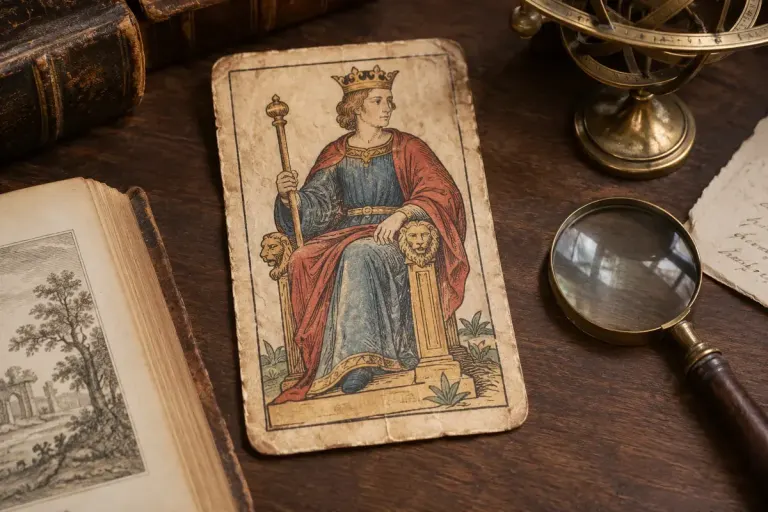
Tarot history
The Tarot de Paris puts unfamiliar scenes behind familiar card names
The Tarot de Paris pairs familiar card numbers with unusual scenes. Explore three examples without mistaking a modern symbolic reading for historical proof.

A thoughtful space for symbols and self-reflection.
The Tarot de Paris pairs familiar card numbers with unusual scenes. Explore three examples without mistaking a modern symbolic reading for historical proof.
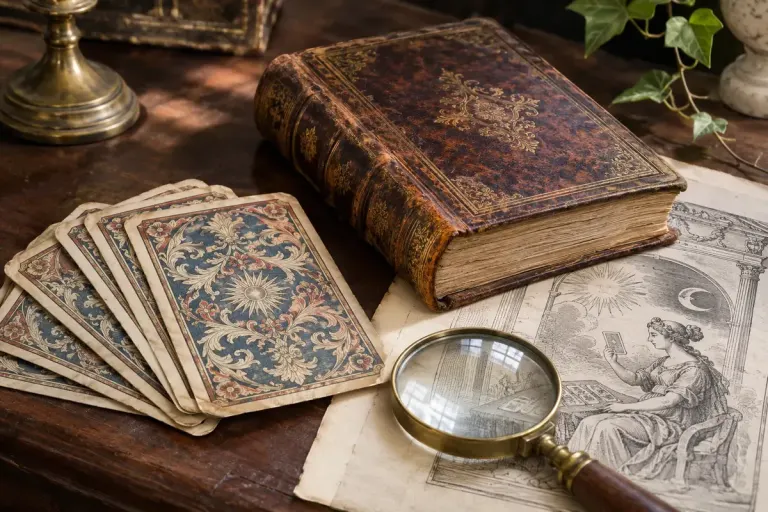
Etteilla’s books belong to the history of published cartomancy. Learn to distinguish his 1770 playing-card work from later writing about tarot.
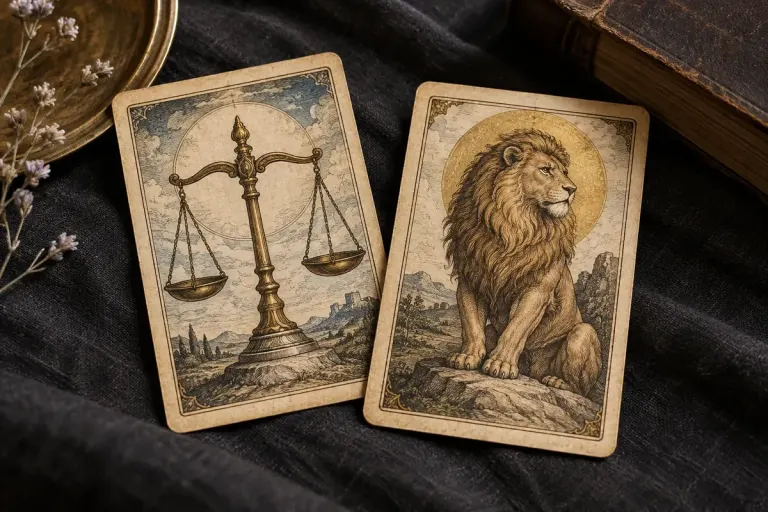
Compare Justice and Strength by name, image and deck tradition rather than assuming their Roman numerals always match across tarot editions.
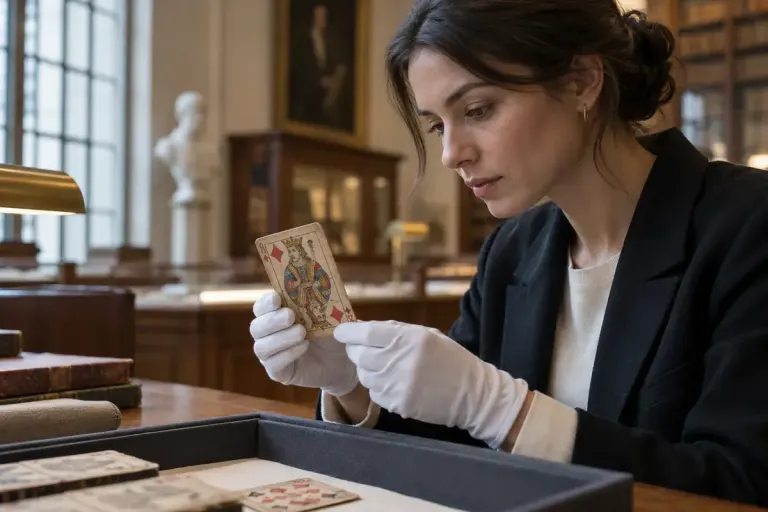
Read museum attribution terms carefully when studying historical tarot cards, and keep uncertainty attached to the artist’s name in your notes.
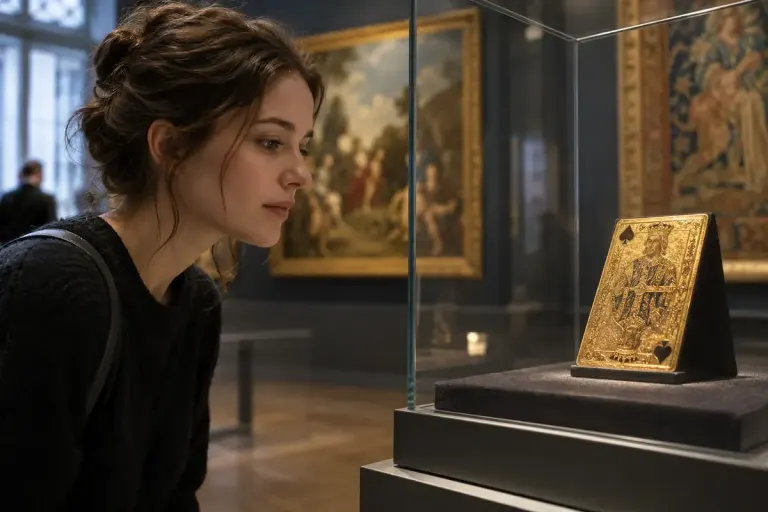
Look at gilding, family emblems and museum descriptions to distinguish the material history of a luxury tarot card from a modern reproduction.
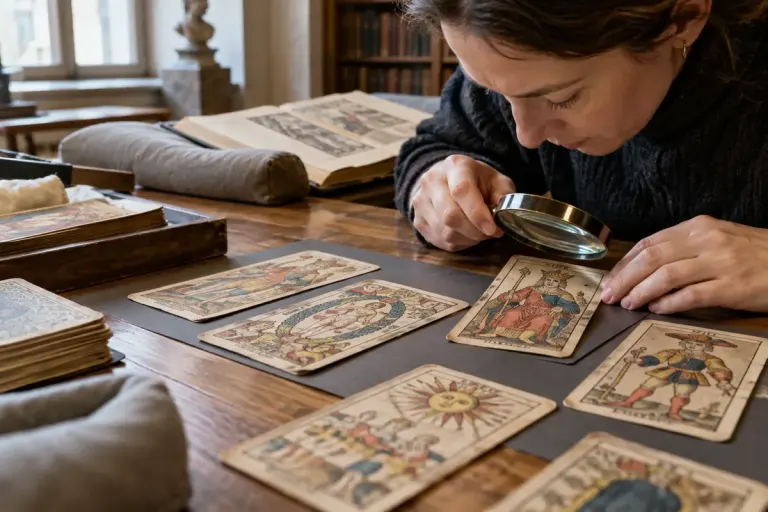
Explore tarot as a printed object by comparing line, colour and catalogue descriptions without treating a modern reproduction as an original artefact.
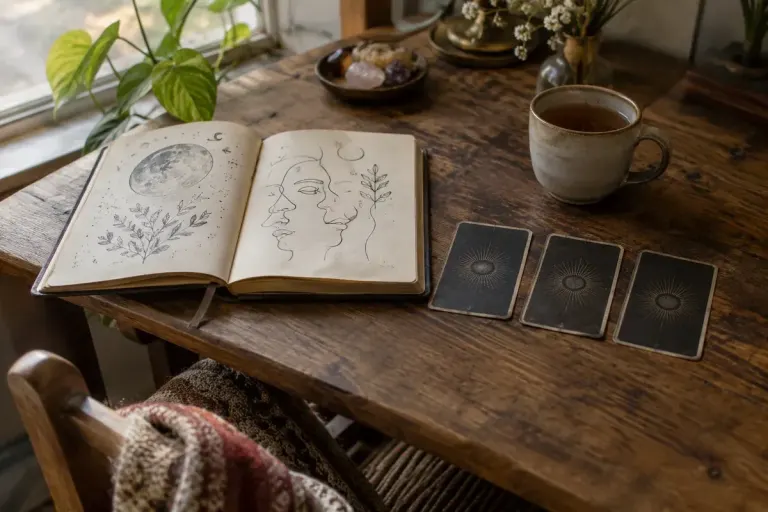
Explore tarot’s history as playing cards and learn to separate a deck’s documented past from modern interpretations and personal meaning.