
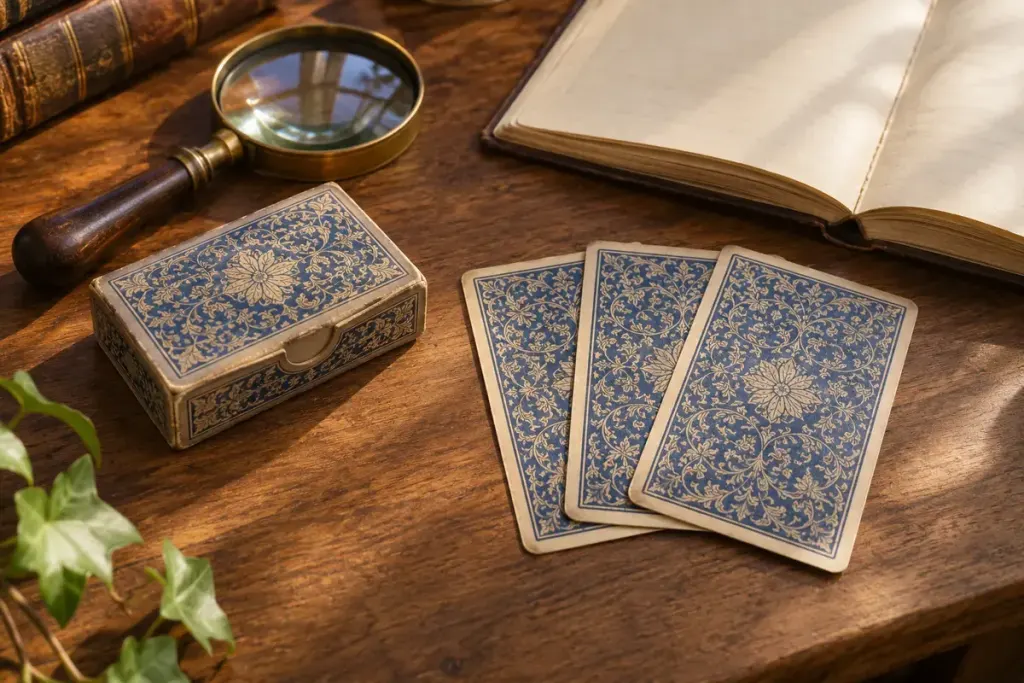
A small pair of letters on a tarot box can point to a substantial difference inside it. In the 1JJ tarot tradition, the two J’s refer to Juno and Jupiter, figures whose names may surprise someone accustomed to another deck’s major arcana.
The Museum of Witchcraft and Magic’s record for object 4159 identifies a Swiss 1JJ pack produced by AG Muller & Cie and explains those initials. Its description also records the box, accompanying material and the cards’ elaborate visual style. The object is a useful reminder that a deck is a particular designed publication, not one universal set of pictures.
Let the printed names lead the comparison
If you encounter a 1JJ deck, start by reading its own card titles and accompanying guide. Do not silently rename Juno or Jupiter to make them fit the terminology of the deck you already know. A comparison becomes more informative when both sets of names remain visible.
Make a simple two-column note: the title printed on the unfamiliar card and the title or role you initially expected. Then examine the image separately. Which attributes are actually shown? Which associations did you bring from mythology, a guidebook or another tarot tradition?
This is a study exercise, not a claim that the cards reveal future events. Keeping observation and interpretation separate also makes it easier to notice when a remembered image belongs to a different edition.
A deck name is not the age of your copy
A modern printing can reproduce an older design tradition. Record the publisher and edition information of the physical copy in front of you rather than assigning it the age of the design.
Historical catalogues show why that distinction matters. The Bibliothèque nationale de France’s record of a Besançon-pattern pack by J. Jerger identifies a particular producer, date range and printing technique. It is another documented pack, not evidence that every similarly styled deck came from the same workshop.
For a personal collection, keep photographs of the box and publication details beside your card notes. These modest records let you distinguish the history of a pattern from the history of your own copy.
The pleasure of the two J’s is that they interrupt familiarity. A deck can remain recognisably tarot while asking you to learn a different set of names, images and publishing details.