
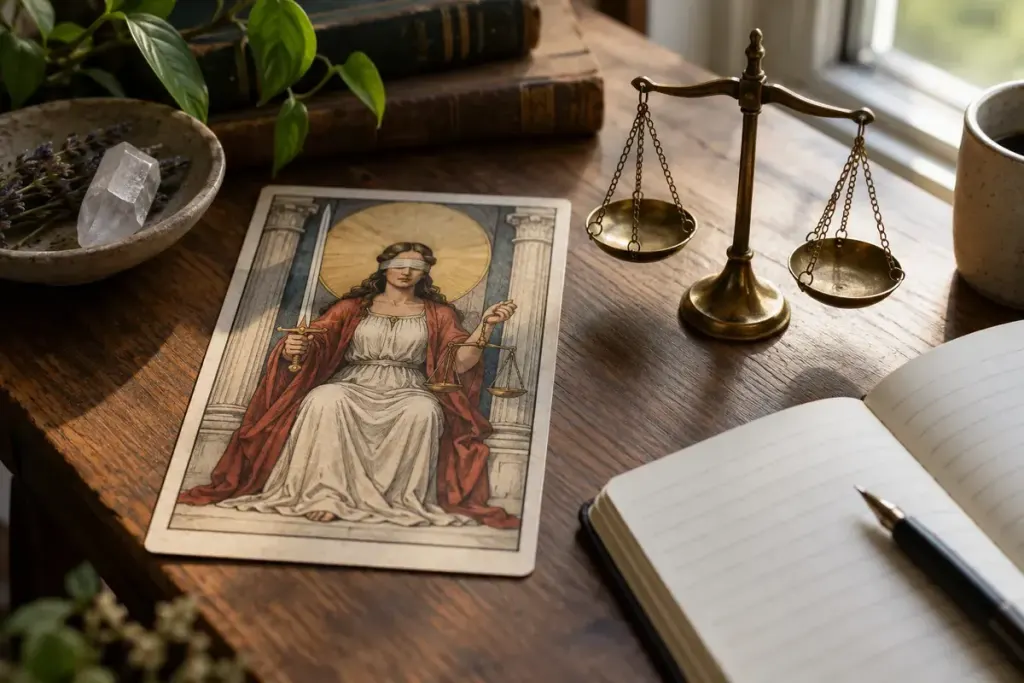
On many familiar versions of Justice, the scales are small enough to overlook beside the sword and central figure. Yet they offer a useful way into the picture: something is being compared, and the comparison needs a measure.
Start with the deck in front of you. Are the pans level? How are they held? What else shares the frame? A contemporary artist may change the objects or the figure, so a description of one historical card should not be pasted onto every deck.
A useful historical reference is Justice in A. E. Waite’s Pictorial Key to the Tarot, illustrated by Pamela Colman Smith. Read that source as evidence of a particular interpretation and image tradition, not as proof that a card can determine the outcome of a real dispute.
Make two short notes. In the first, describe only what is visible. In the second, write what those details suggest to you. “A figure holds scales” belongs in the first note; “I am thinking about fairness between two obligations” belongs in the second.
That separation makes room for another reader to see the same image differently without either person needing to claim a universal answer. It also helps you notice when a guidebook supplied an idea that you did not actually find in the artwork.
Choose a low-stakes decision, such as dividing the work for a shared dinner. List what each person can contribute, what you do not know, and which standard of fairness you are using. Equal hours, equal cost and an arrangement that accommodates different abilities are not automatically the same thing.
Now return to the scales. Did you assume that equal treatment must look identical? Did you leave an important fact out of the comparison? The exercise is valuable because it makes your reasoning visible, not because the image delivers a verdict.
Keep legal, medical and financial decisions grounded in relevant evidence and qualified advice. The card can remain a thoughtful visual prompt without being asked to settle matters beyond that role.