
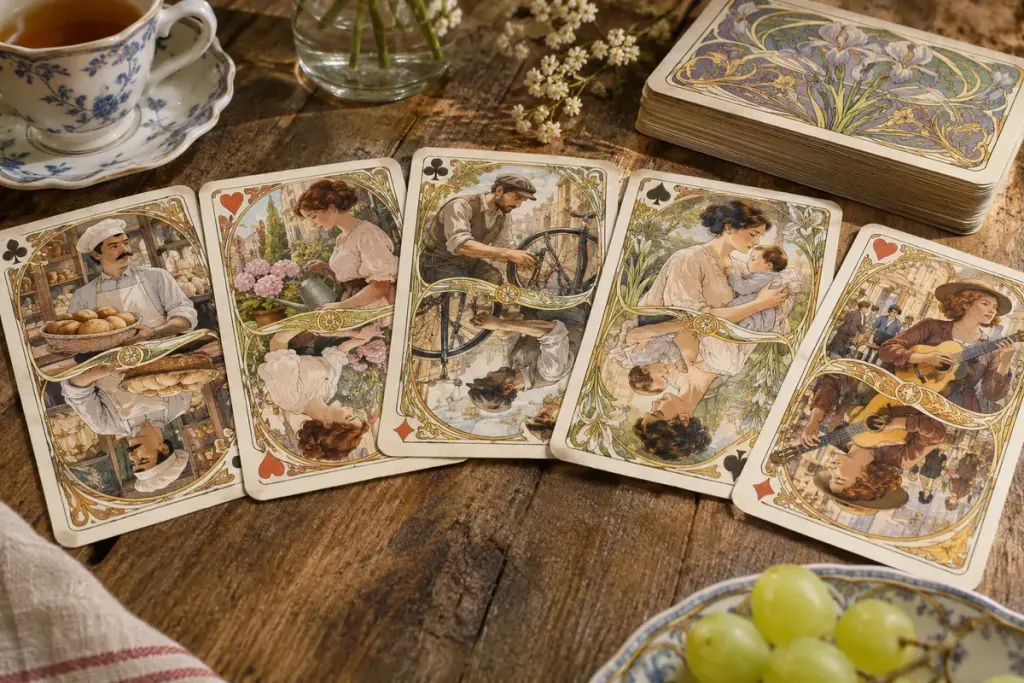
A deck labelled tarot does not necessarily contain the familiar sequence of named figures used in a modern divination guide. Tarot Nouveau belongs to a playing-card tradition, with scenes of everyday life that invite a different kind of looking.
A French Ministry of Culture collection record explicitly distinguishes the Tarot Nouveau playing pattern from cards designed for cartomancy. The broader V&A history of tarot also places card games and later divinatory uses within a changing visual history.
Begin with what the card shows
On a Tarot Nouveau pack, inspect the suit signs, numbering and paired scenes before reaching for a handbook written for a different deck. Everyday occupations, leisure and social encounters can be part of the imagery. Turning a card may bring another scene upright rather than simply reversing one central figure.
For a reflective exercise, choose a scene and describe it without interpretation: who is present, what appears to be happening, and which detail draws your attention? Then write a separate sentence about the association it prompts for you. Keeping observation and personal response apart prevents your association from becoming an invented historical meaning.
For example, a scene of people working together might prompt a question about cooperation in your own week. That question is yours; it is not evidence that the original cardmaker assigned a prediction about your career to the image.
Check the actual pack
Names on modern packaging can overlap. Tarot Nouveau and an Art Nouveau-styled divination deck are not automatically the same thing. Examine the publisher’s description and card list when identifying a particular edition.
The illustration accompanying this article is an AI-created evocation of playing cards, not a reproduction or historical specimen. Use the linked collection records to study real examples. The interest lies in discovering how different purposes create different pictures, rather than making every pack conform to one set of meanings.