Tarot Reflection
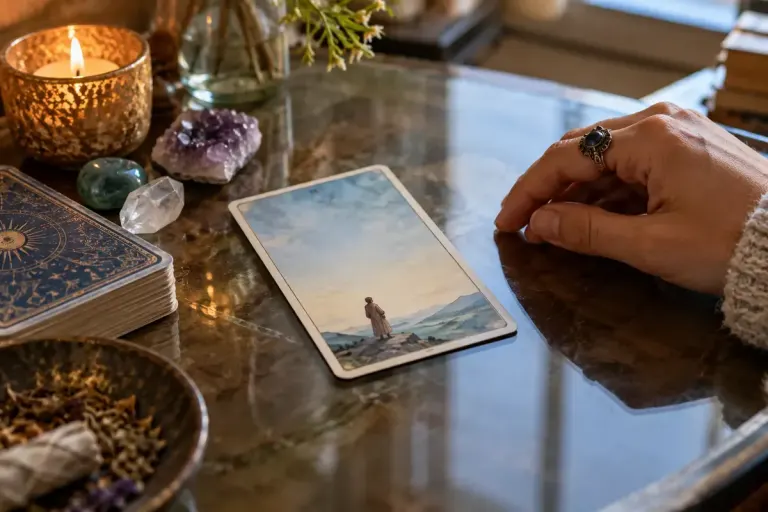
A tarot card’s empty space can be part of the reading
Explore empty space in tarot imagery as a reflective visual exercise, while separating personal associations from claims about the future.

A thoughtful space for symbols and self-reflection.
Explore empty space in tarot imagery as a reflective visual exercise, while separating personal associations from claims about the future.
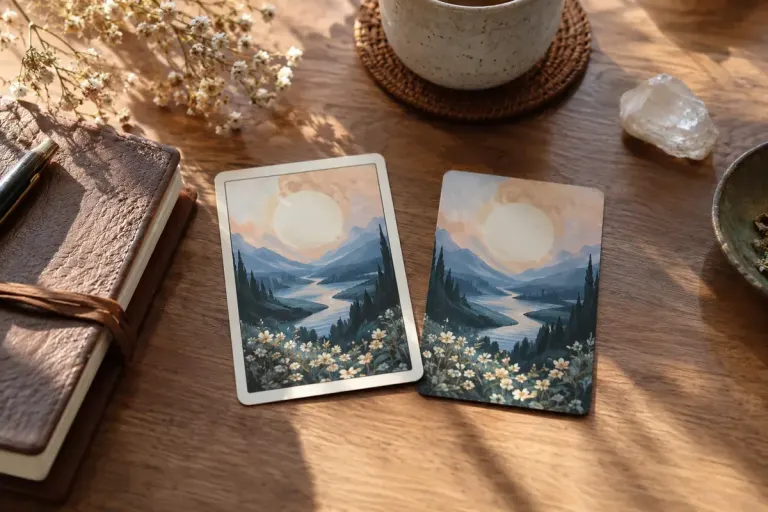
Compare bordered and borderless tarot artwork as visual compositions, without assuming the edition changes a card’s fixed meaning.
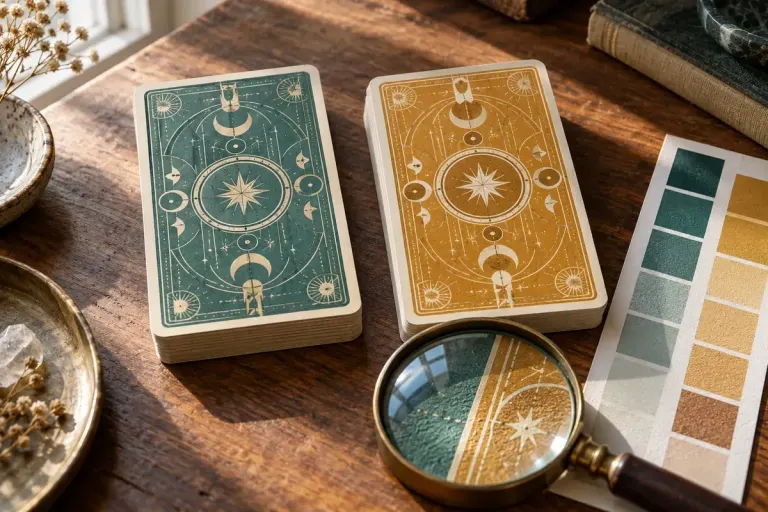
Compare tarot reprints by colour, contrast and reproduction choices while keeping the original line drawing separate from your personal interpretation.
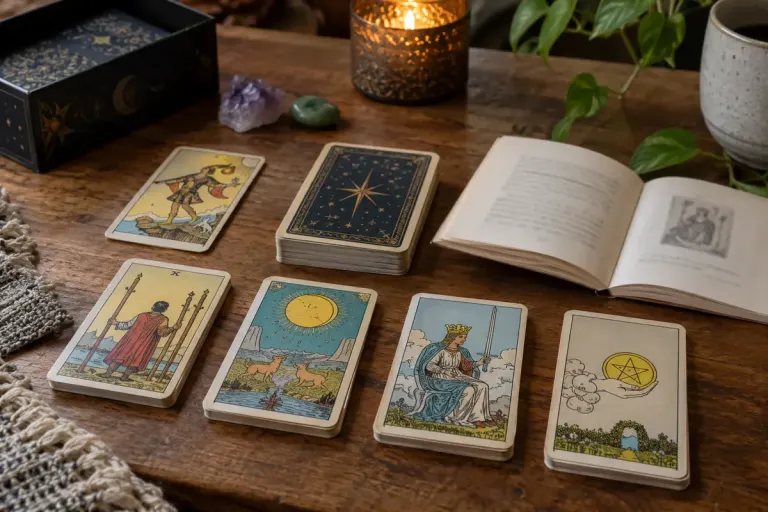
Check a tarot deck’s guidebook before including spare, alternate or promotional cards, and decide how any optional card fits your reflective practice.
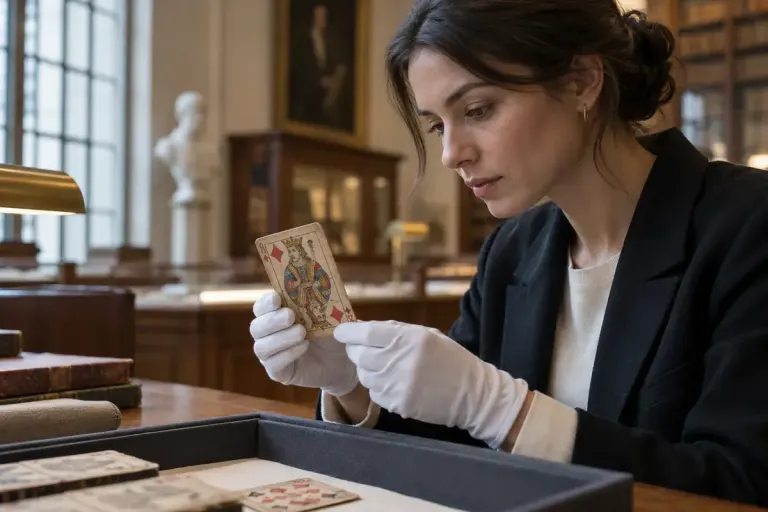
Read museum attribution terms carefully when studying historical tarot cards, and keep uncertainty attached to the artist’s name in your notes.
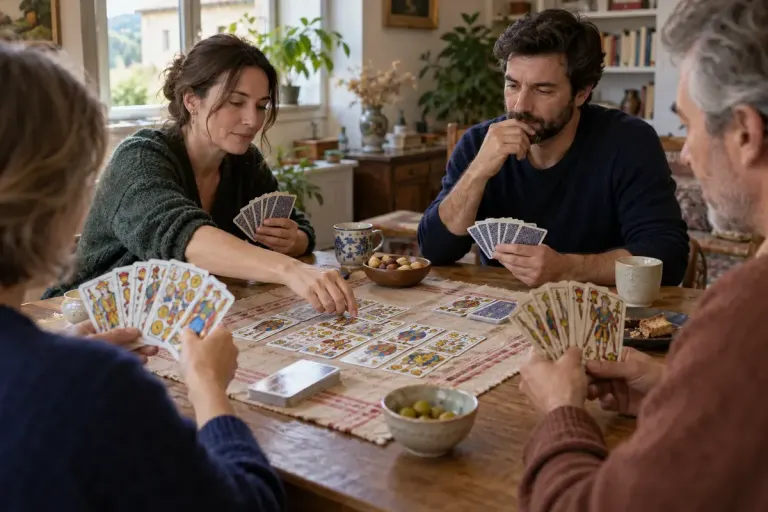
Explore following suit in French Tarot as a card-game rule, and distinguish the legal play of a card from its symbolic interpretation.
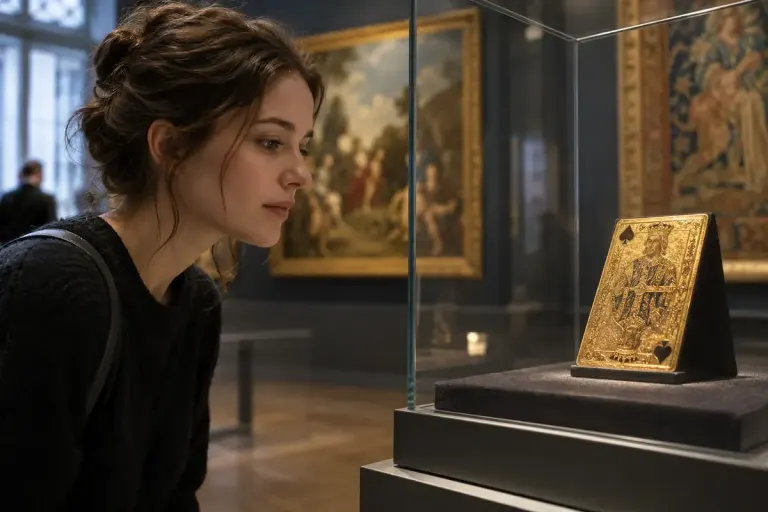
Look at gilding, family emblems and museum descriptions to distinguish the material history of a luxury tarot card from a modern reproduction.
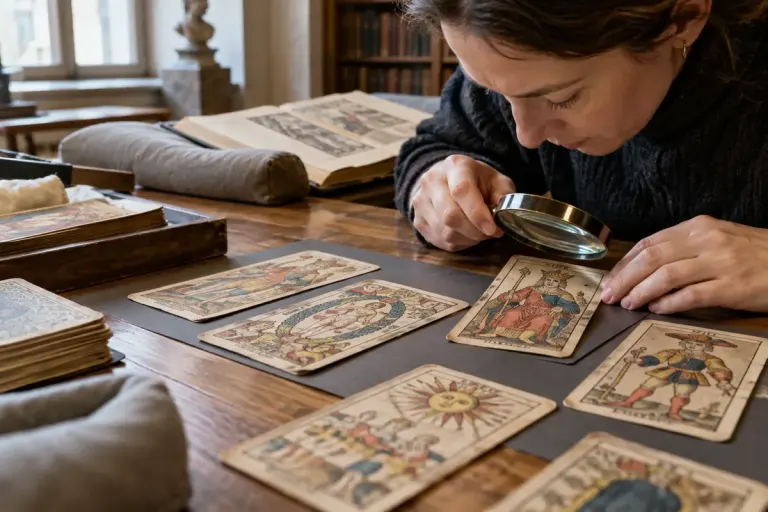
Explore tarot as a printed object by comparing line, colour and catalogue descriptions without treating a modern reproduction as an original artefact.
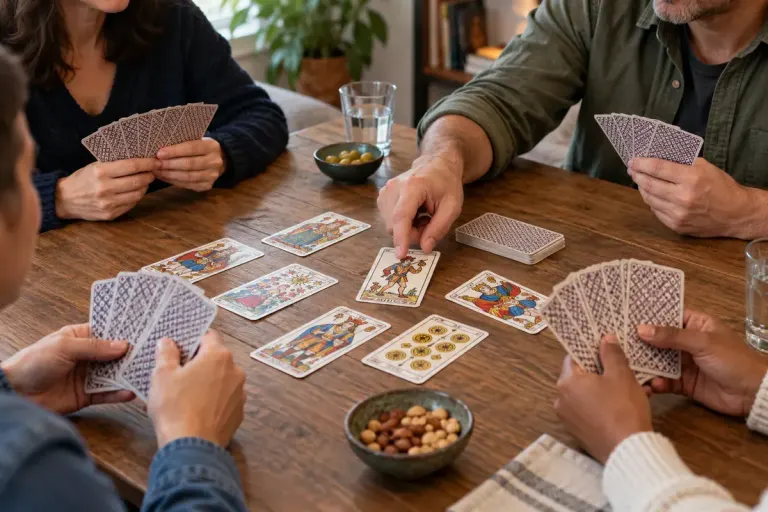
In four-player French Tarot, the Excuse has special handling and end-of-hand rules. It is not simply another high trump.