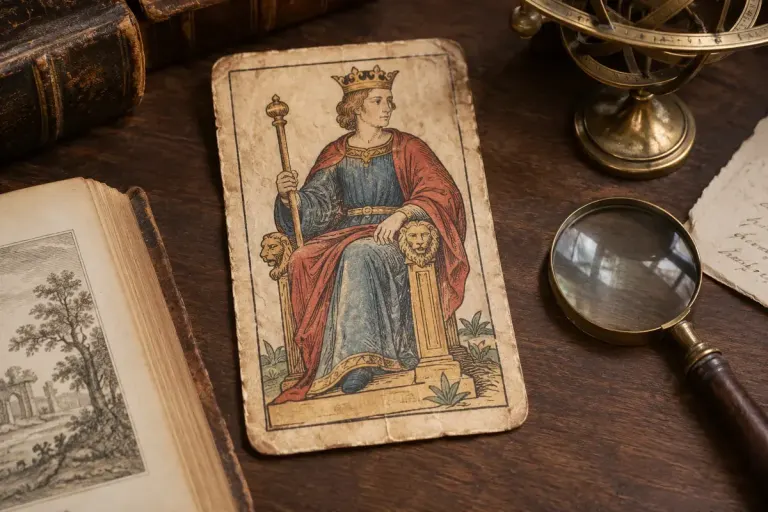
Tarot history
The Tarot de Paris puts unfamiliar scenes behind familiar card names
The Tarot de Paris pairs familiar card numbers with unusual scenes. Explore three examples without mistaking a modern symbolic reading for historical proof.

A thoughtful space for symbols and self-reflection.
The Tarot de Paris pairs familiar card numbers with unusual scenes. Explore three examples without mistaking a modern symbolic reading for historical proof.
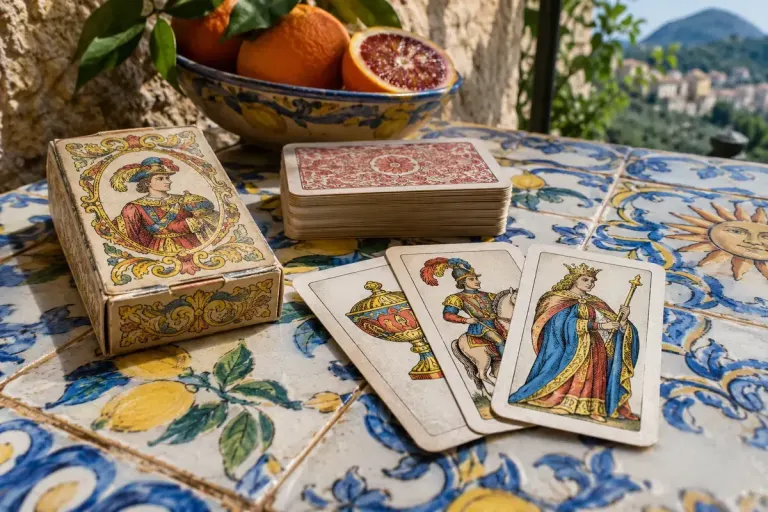
Discover the distinctive size and structure of Tarocco Siciliano, and learn why the cards in a box and those used in a local game may differ.
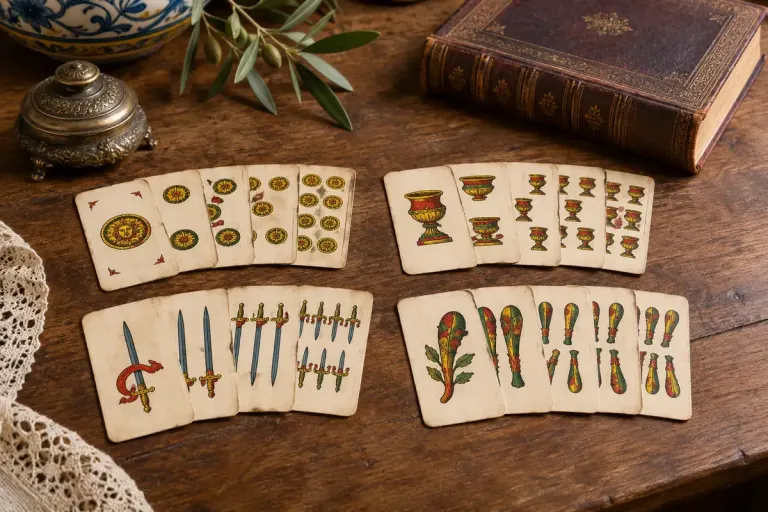
The Bolognese tarot tradition uses a 62-card pack. Explore its missing ranks and local history without assuming every tarot deck shares one structure.
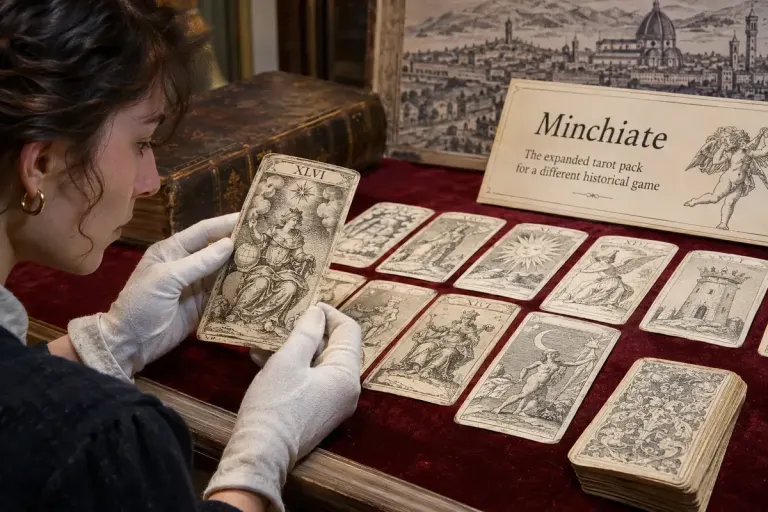
Minchiate’s expanded historical pack includes virtues, elements and zodiac imagery. Learn how to approach it without forcing a familiar 78-card structure.
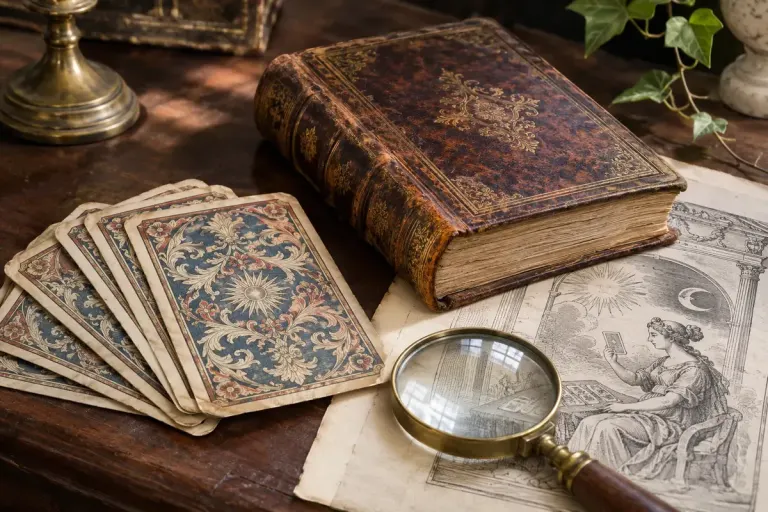
Etteilla’s books belong to the history of published cartomancy. Learn to distinguish his 1770 playing-card work from later writing about tarot.
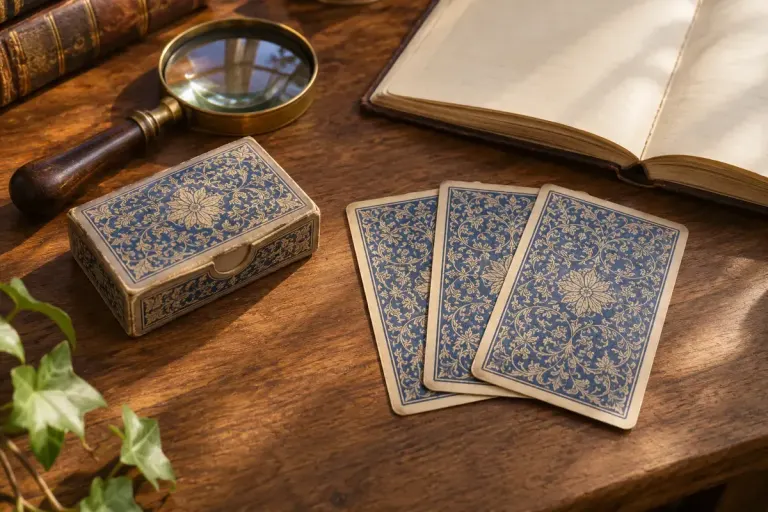
The letters in a 1JJ tarot deck refer to Juno and Jupiter. A museum example offers a useful way into tarot’s varied naming and visual traditions.
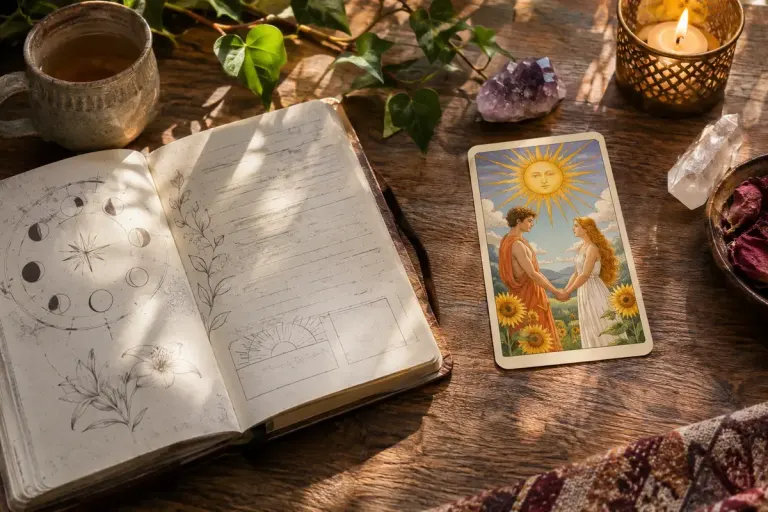
Explore the Lovers card through artwork, personal values and a simple reflection exercise, without treating the image as proof about another person’s feelings.
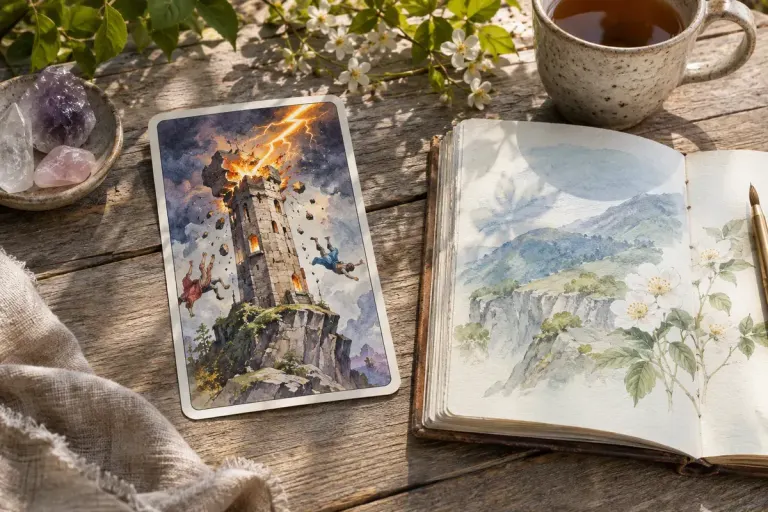
Study The Tower through its composition, figures and disrupted architecture, then use the image for reflection without treating it as a prediction.
Study the wreath in The World tarot card as a visual frame. A short drawing exercise separates what the image shows from the meanings you bring to it.