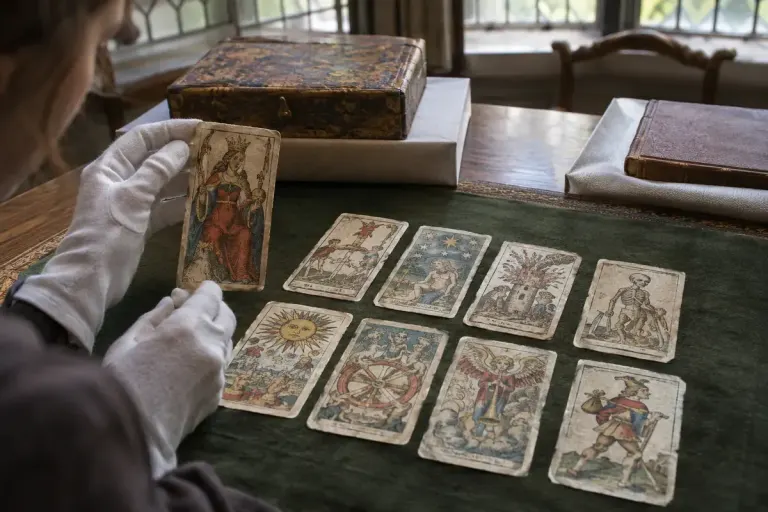
Tarot History and Study
Meet Jacques Viéville’s tarot through its smallest details
Jacques Viéville’s seventeenth-century tarot rewards a close look at its backs, lettering and catalogue record. Explore the deck without inventing a single meaning.

A thoughtful space for symbols and self-reflection.
Jacques Viéville’s seventeenth-century tarot rewards a close look at its backs, lettering and catalogue record. Explore the deck without inventing a single meaning.
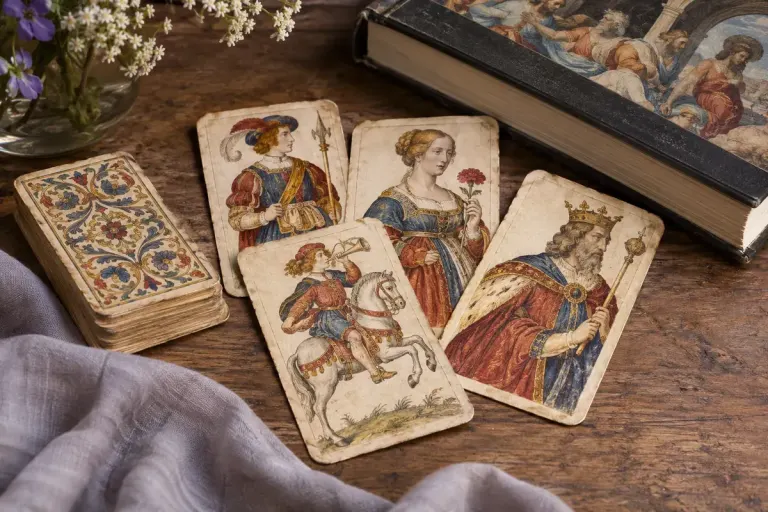
Explore the Sola Busca tarot deck as a historical artwork, and learn how to distinguish a museum record from a modern reproduction or interpretation.
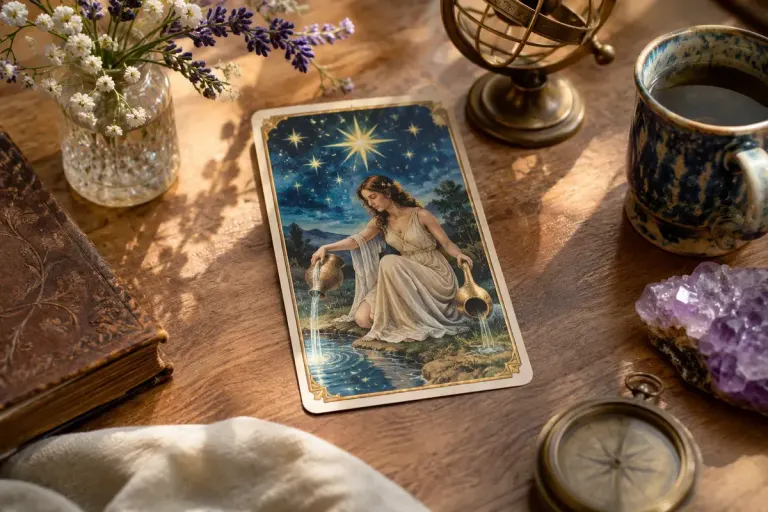
Look closely at the Star card’s water, land and two vessels. This reflective exercise separates visible details from personal interpretation.
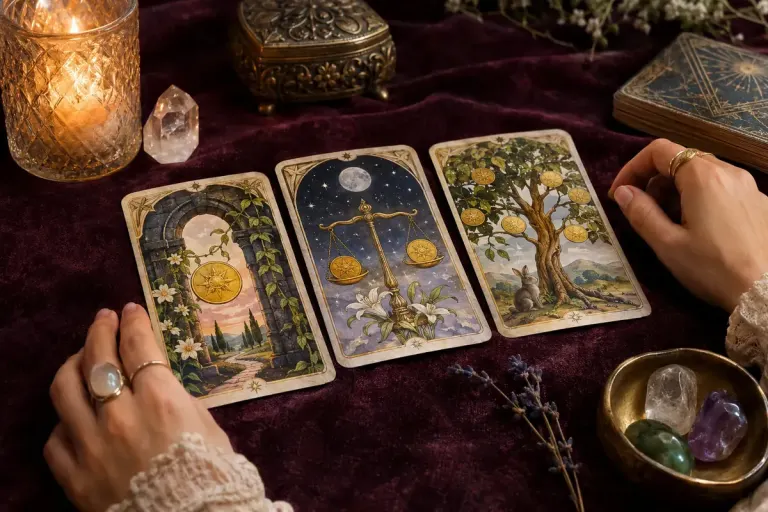
Coins and pentacles connect related tarot suits, but the artwork and guidebook still matter when moving between decks.
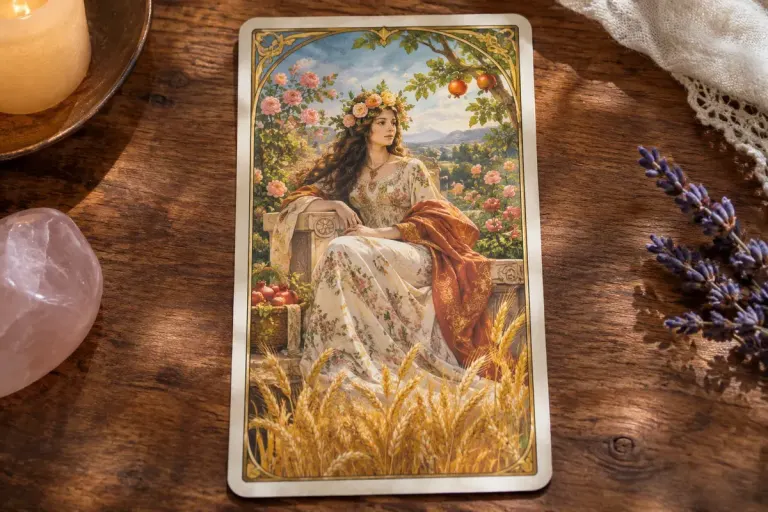
Look closely at the Empress card as an image of cultivation, comfort and attention, with reflective prompts rather than predictions.
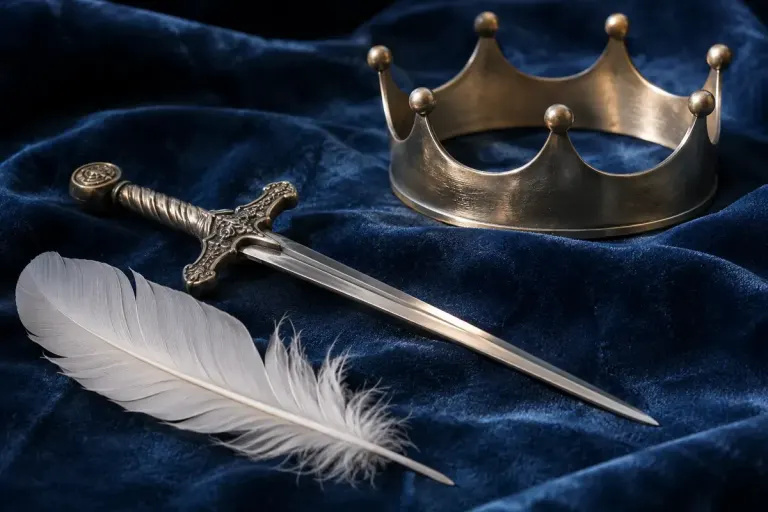
Use the Queen of Swords as a reflective prompt for clear boundaries while separating your interpretation from historical tarot meanings.
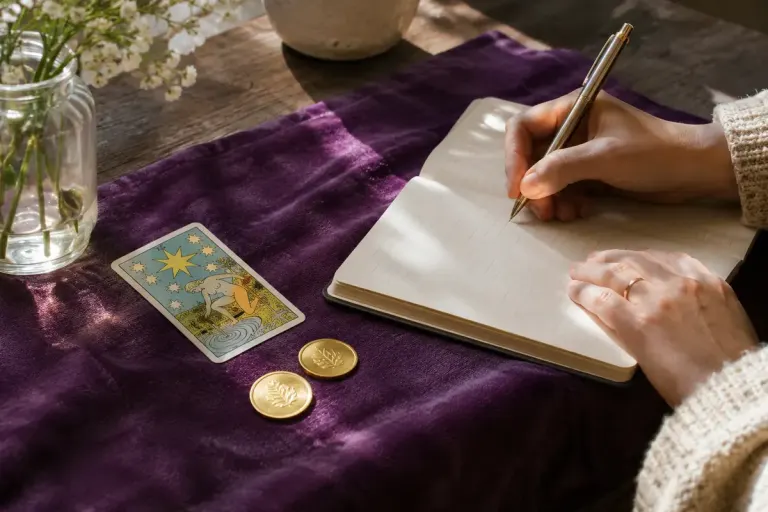
Use the Two of Pentacles as a reflective prompt for competing commitments, with a short exercise that separates real choices from imagined predictions.
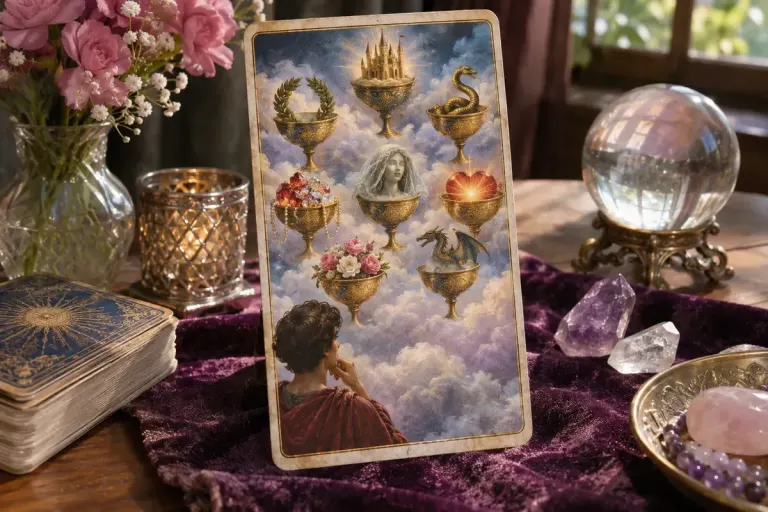
Use the Seven of Cups as a reflection on options, hopes, and evidence, with a simple exercise that keeps imagination separate from a promise.

Explore the Nine of Pentacles through its garden, figure and bird, then separate what the picture shows from the meaning you bring to a reading.